new

Get trending papers in your email inbox!

Subscribe

Daily Papers

byAK and the research community

Jan 8

A Unified Audio-Visual Learning Framework for Localization, Separation, and Recognition

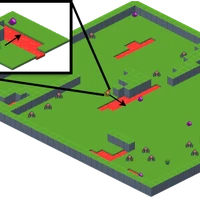
The ability to accurately recognize, localize and separate sound sources is fundamental to any audio-visual perception task. Historically, these abilities were tackled separately, with several methods developed independently for each task. However, given the interconnected nature of source localization, separation, and recognition, independent models are likely to yield suboptimal performance as they fail to capture the interdependence between these tasks. To address this problem, we propose a unified audio-visual learning framework (dubbed OneAVM) that integrates audio and visual cues for joint localization, separation, and recognition. OneAVM comprises a shared audio-visual encoder and task-specific decoders trained with three objectives. The first objective aligns audio and visual representations through a localized audio-visual correspondence loss. The second tackles visual source separation using a traditional mix-and-separate framework. Finally, the third objective reinforces visual feature separation and localization by mixing images in pixel space and aligning their representations with those of all corresponding sound sources. Extensive experiments on MUSIC, VGG-Instruments, VGG-Music, and VGGSound datasets demonstrate the effectiveness of OneAVM for all three tasks, audio-visual source localization, separation, and nearest neighbor recognition, and empirically demonstrate a strong positive transfer between them.


  • 2 authors
·
May 30, 2023

Weakly-supervised Audio Separation via Bi-modal Semantic Similarity

Conditional sound separation in multi-source audio mixtures without having access to single source sound data during training is a long standing challenge. Existing mix-and-separate based methods suffer from significant performance drop with multi-source training mixtures due to the lack of supervision signal for single source separation cases during training. However, in the case of language-conditional audio separation, we do have access to corresponding text descriptions for each audio mixture in our training data, which can be seen as (rough) representations of the audio samples in the language modality. To this end, in this paper, we propose a generic bi-modal separation framework which can enhance the existing unsupervised frameworks to separate single-source signals in a target modality (i.e., audio) using the easily separable corresponding signals in the conditioning modality (i.e., language), without having access to single-source samples in the target modality during training. We empirically show that this is well within reach if we have access to a pretrained joint embedding model between the two modalities (i.e., CLAP). Furthermore, we propose to incorporate our framework into two fundamental scenarios to enhance separation performance. First, we show that our proposed methodology significantly improves the performance of purely unsupervised baselines by reducing the distribution shift between training and test samples. In particular, we show that our framework can achieve 71% boost in terms of Signal-to-Distortion Ratio (SDR) over the baseline, reaching 97.5% of the supervised learning performance. Second, we show that we can further improve the performance of the supervised learning itself by 17% if we augment it by our proposed weakly-supervised framework, that enables a powerful semi-supervised framework for audio separation.

  • 4 authors
·
Apr 2, 2024

JustDense: Just using Dense instead of Sequence Mixer for Time Series analysis

Sequence and channel mixers, the core mechanism in sequence models, have become the de facto standard in time series analysis (TSA). However, recent studies have questioned the necessity of complex sequence mixers, such as attention mechanisms, demonstrating that simpler architectures can achieve comparable or even superior performance. This suggests that the benefits attributed to complex sequencemixers might instead emerge from other architectural or optimization factors. Based on this observation, we pose a central question: Are common sequence mixers necessary for time-series analysis? Therefore, we propose JustDense, an empirical study that systematically replaces sequence mixers in various well-established TSA models with dense layers. Grounded in the MatrixMixer framework, JustDense treats any sequence mixer as a mixing matrix and replaces it with a dense layer. This substitution isolates the mixing operation, enabling a clear theoretical foundation for understanding its role. Therefore, we conducted extensive experiments on 29 benchmarks covering five representative TSA tasks using seven state-of-the-art TSA models to address our research question. The results show that replacing sequence mixers with dense layers yields comparable or even superior performance. In the cases where dedicated sequence mixers still offer benefits, JustDense challenges the assumption that "deeper and more complex architectures are inherently better" in TSA.

High-Quality Sound Separation Across Diverse Categories via Visually-Guided Generative Modeling

We propose DAVIS, a Diffusion-based Audio-VIsual Separation framework that solves the audio-visual sound source separation task through generative learning. Existing methods typically frame sound separation as a mask-based regression problem, achieving significant progress. However, they face limitations in capturing the complex data distribution required for high-quality separation of sounds from diverse categories. In contrast, DAVIS circumvents these issues by leveraging potent generative modeling paradigms, specifically Denoising Diffusion Probabilistic Models (DDPM) and the more recent Flow Matching (FM), integrated within a specialized Separation U-Net architecture. Our framework operates by synthesizing the desired separated sound spectrograms directly from a noise distribution, conditioned concurrently on the mixed audio input and associated visual information. The inherent nature of its generative objective makes DAVIS particularly adept at producing high-quality sound separations for diverse sound categories. We present comparative evaluations of DAVIS, encompassing both its DDPM and Flow Matching variants, against leading methods on the standard AVE and MUSIC datasets. The results affirm that both variants surpass existing approaches in separation quality, highlighting the efficacy of our generative framework for tackling the audio-visual source separation task.

  • 5 authors
·
Sep 26, 2025

QuarkAudio Technical Report

Many existing audio processing and generation models rely on task-specific architectures, resulting in fragmented development efforts and limited extensibility. It is therefore promising to design a unified framework capable of handling multiple tasks, while providing robust instruction and audio understanding and high-quality audio generation. This requires a compatible paradigm design, a powerful backbone, and a high-fidelity audio reconstruction module. To meet these requirements, this technical report introduces QuarkAudio, a decoder-only autoregressive (AR) LM-based generative framework that unifies multiple tasks. The framework includes a unified discrete audio tokenizer, H-Codec, which incorporates self-supervised learning (SSL) representations into the tokenization and reconstruction process. We further propose several improvements to H-Codec, such as a dynamic frame-rate mechanism and extending the audio sampling rate to 48 kHz. QuarkAudio unifies tasks by using task-specific conditional information as the conditioning sequence of the decoder-only LM, and predicting discrete target audio tokens in an AR manner. The framework supports a wide range of audio processing and generation tasks, including speech restoration (SR), target speaker extraction (TSE), speech separation (SS), voice conversion (VC), and language-queried audio source separation (LASS). In addition, we extend downstream tasks to universal free-form audio editing guided by natural language instructions (including speech semantic editing and audio event editing). Experimental results show that H-Codec achieves high-quality audio reconstruction with a low frame rate, improving both the efficiency and performance of downstream audio generation, and that QuarkAudio delivers competitive or comparable performance to state-of-the-art task-specific or multi-task systems across multiple tasks.

  • 8 authors
·
Dec 23, 2025

Harnessing Hard Mixed Samples with Decoupled Regularizer

Mixup is an efficient data augmentation approach that improves the generalization of neural networks by smoothing the decision boundary with mixed data. Recently, dynamic mixup methods have improved previous static policies effectively (e.g., linear interpolation) by maximizing target-related salient regions in mixed samples, but excessive additional time costs are not acceptable. These additional computational overheads mainly come from optimizing the mixed samples according to the mixed labels. However, we found that the extra optimizing step may be redundant because label-mismatched mixed samples are informative hard mixed samples for deep models to localize discriminative features. In this paper, we thus are not trying to propose a more complicated dynamic mixup policy but rather an efficient mixup objective function with a decoupled regularizer named Decoupled Mixup (DM). The primary effect is that DM can adaptively utilize those hard mixed samples to mine discriminative features without losing the original smoothness of mixup. As a result, DM enables static mixup methods to achieve comparable or even exceed the performance of dynamic methods without any extra computation. This also leads to an interesting objective design problem for mixup training that we need to focus on both smoothing the decision boundaries and identifying discriminative features. Extensive experiments on supervised and semi-supervised learning benchmarks across seven datasets validate the effectiveness of DM as a plug-and-play module. Source code and models are available at https://github.com/Westlake-AI/openmixup

  • 6 authors
·
Mar 21, 2022

LoRA-Mixer: Coordinate Modular LoRA Experts Through Serial Attention Routing

Recent efforts to combine low-rank adaptation (LoRA) with mixture-of-experts (MoE) for adapting large language models (LLMs) to multiple tasks still exhibit prevailing limitations: they either swap entire attention/feed-forward layers for switch experts or bolt on parallel expert branches, diluting parameter efficiency and task fidelity. We propose the LoRA-Mixer, a modular and lightweight MoE framework that integrates LoRA experts. Our core innovation lies in replacing the projection matrices of the attention module's input/output linear layers with dynamically routed, task-specific LoRA experts. This design ensures seamless compatibility with diverse foundation models, including transformers and state space models (SSMs), by leveraging their inherent linear projection structures. The framework supports two operational paradigms: (1) joint optimization of LoRA experts and routing mechanisms via a novel hard-soft routing strategy, or (2) direct deployment of pre-trained, frozen LoRA modules sourced from external repositories. To enable robust router training with limited data while ensuring stable routing decisions and maximizing expert reuse, we introduce an adaptive Specialization Balance Loss (SBL) that jointly optimizes expert balance and task-specific alignment. Extensive experiments on seven benchmark datasets, including MedQA, CoLA, SST-2, GSM8K, ARC-E, ARC-C, and HumanEval, demonstrate the effectiveness of LoRA-Mixer. On datasets such as GSM8K, HumanEval, and MedQA, LoRA-Mixer achieves significant improvements of 7.61%, 4.88%, and 3.08% over the base models, respectively. Compared with state-of-the-art methods, LoRA-Mixer achieves additional improvements of 1.09%, 1.45%, and 1.68%, respectively, using only 48% of the parameters, demonstrating its efficiency and strong performance.

  • 6 authors
·
Jun 17, 2025

Towards Foundational Models for Dynamical System Reconstruction: Hierarchical Meta-Learning via Mixture of Experts

As foundational models reshape scientific discovery, a bottleneck persists in dynamical system reconstruction (DSR): the ability to learn across system hierarchies. Many meta-learning approaches have been applied successfully to single systems, but falter when confronted with sparse, loosely related datasets requiring multiple hierarchies to be learned. Mixture of Experts (MoE) offers a natural paradigm to address these challenges. Despite their potential, we demonstrate that naive MoEs are inadequate for the nuanced demands of hierarchical DSR, largely due to their gradient descent-based gating update mechanism which leads to slow updates and conflicted routing during training. To overcome this limitation, we introduce MixER: Mixture of Expert Reconstructors, a novel sparse top-1 MoE layer employing a custom gating update algorithm based on K-means and least squares. Extensive experiments validate MixER's capabilities, demonstrating efficient training and scalability to systems of up to ten parametric ordinary differential equations. However, our layer underperforms state-of-the-art meta-learners in high-data regimes, particularly when each expert is constrained to process only a fraction of a dataset composed of highly related data points. Further analysis with synthetic and neuroscientific time series suggests that the quality of the contextual representations generated by MixER is closely linked to the presence of hierarchical structure in the data.

  • 5 authors
·
Feb 7, 2025

Aioli: A Unified Optimization Framework for Language Model Data Mixing

Language model performance depends on identifying the optimal mixture of data groups to train on (e.g., law, code, math). Prior work has proposed a diverse set of methods to efficiently learn mixture proportions, ranging from fitting regression models over training runs to dynamically updating proportions throughout training. Surprisingly, we find that no existing method consistently outperforms a simple stratified sampling baseline in terms of average test perplexity. To understand this inconsistency, we unify existing methods into a standard framework, showing they are equivalent to solving a common optimization problem: minimize average loss subject to a method-specific mixing law -- an implicit assumption on the relationship between loss and mixture proportions. This framework suggests that measuring the fidelity of a method's mixing law can offer insights into its performance. Empirically, we find that existing methods set their mixing law parameters inaccurately, resulting in the inconsistent mixing performance we observe. Using this insight, we derive a new online method named Aioli, which directly estimates the mixing law parameters throughout training and uses them to dynamically adjust proportions. Aioli outperforms stratified sampling on 6 out of 6 datasets by an average of 0.27 test perplexity points, whereas existing methods fail to consistently beat stratified sampling, doing up to 6.9 points worse. Moreover, in a practical setting where proportions are learned on shorter runs due to computational constraints, Aioli can dynamically adjust these proportions over the full training run, consistently improving performance over existing methods by up to 12.012 test perplexity points.

  • 5 authors
·
Nov 8, 2024 2

torchdistill: A Modular, Configuration-Driven Framework for Knowledge Distillation

While knowledge distillation (transfer) has been attracting attentions from the research community, the recent development in the fields has heightened the need for reproducible studies and highly generalized frameworks to lower barriers to such high-quality, reproducible deep learning research. Several researchers voluntarily published frameworks used in their knowledge distillation studies to help other interested researchers reproduce their original work. Such frameworks, however, are usually neither well generalized nor maintained, thus researchers are still required to write a lot of code to refactor/build on the frameworks for introducing new methods, models, datasets and designing experiments. In this paper, we present our developed open-source framework built on PyTorch and dedicated for knowledge distillation studies. The framework is designed to enable users to design experiments by declarative PyYAML configuration files, and helps researchers complete the recently proposed ML Code Completeness Checklist. Using the developed framework, we demonstrate its various efficient training strategies, and implement a variety of knowledge distillation methods. We also reproduce some of their original experimental results on the ImageNet and COCO datasets presented at major machine learning conferences such as ICLR, NeurIPS, CVPR and ECCV, including recent state-of-the-art methods. All the source code, configurations, log files and trained model weights are publicly available at https://github.com/yoshitomo-matsubara/torchdistill .

  • 1 authors
·
Nov 25, 2020

MixGRPO: Unlocking Flow-based GRPO Efficiency with Mixed ODE-SDE

Although GRPO substantially enhances flow matching models in human preference alignment of image generation, methods such as FlowGRPO still exhibit inefficiency due to the necessity of sampling and optimizing over all denoising steps specified by the Markov Decision Process (MDP). In this paper, we propose MixGRPO, a novel framework that leverages the flexibility of mixed sampling strategies through the integration of stochastic differential equations (SDE) and ordinary differential equations (ODE). This streamlines the optimization process within the MDP to improve efficiency and boost performance. Specifically, MixGRPO introduces a sliding window mechanism, using SDE sampling and GRPO-guided optimization only within the window, while applying ODE sampling outside. This design confines sampling randomness to the time-steps within the window, thereby reducing the optimization overhead, and allowing for more focused gradient updates to accelerate convergence. Additionally, as time-steps beyond the sliding window are not involved in optimization, higher-order solvers are supported for sampling. So we present a faster variant, termed MixGRPO-Flash, which further improves training efficiency while achieving comparable performance. MixGRPO exhibits substantial gains across multiple dimensions of human preference alignment, outperforming DanceGRPO in both effectiveness and efficiency, with nearly 50% lower training time. Notably, MixGRPO-Flash further reduces training time by 71%. Codes and models are available at https://github.com/Tencent-Hunyuan/MixGRPO{MixGRPO}.

  • 7 authors
·
Jul 29, 2025 2

OpenMixup: Open Mixup Toolbox and Benchmark for Visual Representation Learning

Mixup augmentation has emerged as a widely used technique for improving the generalization ability of deep neural networks (DNNs). However, the lack of standardized implementations and benchmarks has impeded recent progress, resulting in poor reproducibility, unfair comparisons, and conflicting insights. In this paper, we introduce OpenMixup, the first mixup augmentation codebase, and benchmark for visual representation learning. Specifically, we train 18 representative mixup baselines from scratch and rigorously evaluate them across 11 image datasets of varying scales and granularity, ranging from fine-grained scenarios to complex non-iconic scenes. We also open-source our modular codebase, including a collection of popular vision backbones, optimization strategies, and analysis toolkits, which not only supports the benchmarking but enables broader mixup applications beyond classification, such as self-supervised learning and regression tasks. Through experiments and empirical analysis, we gain observations and insights on mixup performance-efficiency trade-offs, generalization, and optimization behaviors, and thereby identify preferred choices for different needs. To the best of our knowledge, OpenMixup has facilitated several recent studies. We believe this work can further advance reproducible mixup augmentation research and thereby lay a solid ground for future progress in the community. The source code and user documents are available at https://github.com/Westlake-AI/openmixup.

  • 8 authors
·
Sep 11, 2022

NExT-OMNI: Towards Any-to-Any Omnimodal Foundation Models with Discrete Flow Matching

Next-generation multimodal foundation models capable of any-to-any cross-modal generation and multi-turn interaction will serve as core components of artificial general intelligence systems, playing a pivotal role in human-machine interaction. However, most existing multimodal models remain constrained by autoregressive architectures, whose inherent limitations prevent a balanced integration of understanding and generation capabilities. Although hybrid and decoupling strategies have been explored to address these tasks within unified frameworks separately, their redundant, non-integrated designs limit their applicability to broader scenarios, such as cross-modal retrieval. In this work, we introduce NExT-OMNI, an open-source omnimodal foundation model that achieves unified modeling through discrete flow paradigms. By leveraging metric-induced probability paths and kinetic optimal velocities, NExT-OMNI natively supports any-to-any understanding and generation with enhanced response efficiency, while enabling broader application scenarios through concise unified representations rather than task-decoupled designs. Trained on large-scale interleaved text, image, video, and audio data, NExT-OMNI delivers competitive performance on multimodal generation and understanding benchmarks, while outperforming prior unified models in multi-turn multimodal interaction and cross-modal retrieval, highlighting its architectural advantages as a next-generation multimodal foundation model. To advance further research, we release training details, data protocols, and open-source both the code and model checkpoints.

  • 8 authors
·
Oct 15, 2025

MixFormer: End-to-End Tracking with Iterative Mixed Attention

Tracking often uses a multi-stage pipeline of feature extraction, target information integration, and bounding box estimation. To simplify this pipeline and unify the process of feature extraction and target information integration, we present a compact tracking framework, termed as MixFormer, built upon transformers. Our core design is to utilize the flexibility of attention operations, and propose a Mixed Attention Module (MAM) for simultaneous feature extraction and target information integration. This synchronous modeling scheme allows to extract target-specific discriminative features and perform extensive communication between target and search area. Based on MAM, we build our MixFormer tracking framework simply by stacking multiple MAMs with progressive patch embedding and placing a localization head on top. In addition, to handle multiple target templates during online tracking, we devise an asymmetric attention scheme in MAM to reduce computational cost, and propose an effective score prediction module to select high-quality templates. Our MixFormer sets a new state-of-the-art performance on five tracking benchmarks, including LaSOT, TrackingNet, VOT2020, GOT-10k, and UAV123. In particular, our MixFormer-L achieves NP score of 79.9% on LaSOT, 88.9% on TrackingNet and EAO of 0.555 on VOT2020. We also perform in-depth ablation studies to demonstrate the effectiveness of simultaneous feature extraction and information integration. Code and trained models are publicly available at https://github.com/MCG-NJU/MixFormer.

  • 4 authors
·
Mar 21, 2022

CODA: Coordinating the Cerebrum and Cerebellum for a Dual-Brain Computer Use Agent with Decoupled Reinforcement Learning

Autonomous agents for Graphical User Interfaces (GUIs) face significant challenges in specialized domains such as scientific computing, where both long-horizon planning and precise execution are required. Existing approaches suffer from a trade-off: generalist agents excel at planning but perform poorly in execution, while specialized agents demonstrate the opposite weakness. Recent compositional frameworks attempt to bridge this gap by combining a planner and an actor, but they are typically static and non-trainable, which prevents adaptation from experience. This is a critical limitation given the scarcity of high-quality data in scientific domains. To address these limitations, we introduce CODA, a novel and trainable compositional framework that integrates a generalist planner (Cerebrum) with a specialist executor (Cerebellum), trained via a dedicated two-stage pipeline. In the first stage, Specialization, we apply a decoupled GRPO approach to train an expert planner for each scientific application individually, bootstrapping from a small set of task trajectories. In the second stage, Generalization, we aggregate all successful trajectories from the specialized experts to build a consolidated dataset, which is then used for supervised fine-tuning of the final planner. This equips CODA with both robust execution and cross-domain generalization. Evaluated on four challenging applications from the ScienceBoard benchmark, CODA significantly outperforms baselines and establishes a new state of the art among open-source models.

  • 11 authors
·
Aug 27, 2025 2

Adversarial AutoMixup

Data mixing augmentation has been widely applied to improve the generalization ability of deep neural networks. Recently, offline data mixing augmentation, e.g. handcrafted and saliency information-based mixup, has been gradually replaced by automatic mixing approaches. Through minimizing two sub-tasks, namely, mixed sample generation and mixup classification in an end-to-end way, AutoMix significantly improves accuracy on image classification tasks. However, as the optimization objective is consistent for the two sub-tasks, this approach is prone to generating consistent instead of diverse mixed samples, which results in overfitting for target task training. In this paper, we propose AdAutomixup, an adversarial automatic mixup augmentation approach that generates challenging samples to train a robust classifier for image classification, by alternatively optimizing the classifier and the mixup sample generator. AdAutomixup comprises two modules, a mixed example generator, and a target classifier. The mixed sample generator aims to produce hard mixed examples to challenge the target classifier, while the target classifier's aim is to learn robust features from hard mixed examples to improve generalization. To prevent the collapse of the inherent meanings of images, we further introduce an exponential moving average (EMA) teacher and cosine similarity to train AdAutomixup in an end-to-end way. Extensive experiments on seven image benchmarks consistently prove that our approach outperforms the state of the art in various classification scenarios. The source code is available at https://github.com/JinXins/Adversarial-AutoMixup.

  • 5 authors
·
Dec 19, 2023

MusicLDM: Enhancing Novelty in Text-to-Music Generation Using Beat-Synchronous Mixup Strategies

Diffusion models have shown promising results in cross-modal generation tasks, including text-to-image and text-to-audio generation. However, generating music, as a special type of audio, presents unique challenges due to limited availability of music data and sensitive issues related to copyright and plagiarism. In this paper, to tackle these challenges, we first construct a state-of-the-art text-to-music model, MusicLDM, that adapts Stable Diffusion and AudioLDM architectures to the music domain. We achieve this by retraining the contrastive language-audio pretraining model (CLAP) and the Hifi-GAN vocoder, as components of MusicLDM, on a collection of music data samples. Then, to address the limitations of training data and to avoid plagiarism, we leverage a beat tracking model and propose two different mixup strategies for data augmentation: beat-synchronous audio mixup and beat-synchronous latent mixup, which recombine training audio directly or via a latent embeddings space, respectively. Such mixup strategies encourage the model to interpolate between musical training samples and generate new music within the convex hull of the training data, making the generated music more diverse while still staying faithful to the corresponding style. In addition to popular evaluation metrics, we design several new evaluation metrics based on CLAP score to demonstrate that our proposed MusicLDM and beat-synchronous mixup strategies improve both the quality and novelty of generated music, as well as the correspondence between input text and generated music.

  • 6 authors
·
Aug 3, 2023

MagicMix: Semantic Mixing with Diffusion Models

Have you ever imagined what a corgi-alike coffee machine or a tiger-alike rabbit would look like? In this work, we attempt to answer these questions by exploring a new task called semantic mixing, aiming at blending two different semantics to create a new concept (e.g., corgi + coffee machine -- > corgi-alike coffee machine). Unlike style transfer, where an image is stylized according to the reference style without changing the image content, semantic blending mixes two different concepts in a semantic manner to synthesize a novel concept while preserving the spatial layout and geometry. To this end, we present MagicMix, a simple yet effective solution based on pre-trained text-conditioned diffusion models. Motivated by the progressive generation property of diffusion models where layout/shape emerges at early denoising steps while semantically meaningful details appear at later steps during the denoising process, our method first obtains a coarse layout (either by corrupting an image or denoising from a pure Gaussian noise given a text prompt), followed by injection of conditional prompt for semantic mixing. Our method does not require any spatial mask or re-training, yet is able to synthesize novel objects with high fidelity. To improve the mixing quality, we further devise two simple strategies to provide better control and flexibility over the synthesized content. With our method, we present our results over diverse downstream applications, including semantic style transfer, novel object synthesis, breed mixing, and concept removal, demonstrating the flexibility of our method. More results can be found on the project page https://magicmix.github.io

  • 4 authors
·
Oct 28, 2022

Mix3D: Out-of-Context Data Augmentation for 3D Scenes

We present Mix3D, a data augmentation technique for segmenting large-scale 3D scenes. Since scene context helps reasoning about object semantics, current works focus on models with large capacity and receptive fields that can fully capture the global context of an input 3D scene. However, strong contextual priors can have detrimental implications like mistaking a pedestrian crossing the street for a car. In this work, we focus on the importance of balancing global scene context and local geometry, with the goal of generalizing beyond the contextual priors in the training set. In particular, we propose a "mixing" technique which creates new training samples by combining two augmented scenes. By doing so, object instances are implicitly placed into novel out-of-context environments and therefore making it harder for models to rely on scene context alone, and instead infer semantics from local structure as well. We perform detailed analysis to understand the importance of global context, local structures and the effect of mixing scenes. In experiments, we show that models trained with Mix3D profit from a significant performance boost on indoor (ScanNet, S3DIS) and outdoor datasets (SemanticKITTI). Mix3D can be trivially used with any existing method, e.g., trained with Mix3D, MinkowskiNet outperforms all prior state-of-the-art methods by a significant margin on the ScanNet test benchmark 78.1 mIoU. Code is available at: https://nekrasov.dev/mix3d/

  • 5 authors
·
Oct 5, 2021

Configurable Foundation Models: Building LLMs from a Modular Perspective

Advancements in LLMs have recently unveiled challenges tied to computational efficiency and continual scalability due to their requirements of huge parameters, making the applications and evolution of these models on devices with limited computation resources and scenarios requiring various abilities increasingly cumbersome. Inspired by modularity within the human brain, there is a growing tendency to decompose LLMs into numerous functional modules, allowing for inference with part of modules and dynamic assembly of modules to tackle complex tasks, such as mixture-of-experts. To highlight the inherent efficiency and composability of the modular approach, we coin the term brick to represent each functional module, designating the modularized structure as configurable foundation models. In this paper, we offer a comprehensive overview and investigation of the construction, utilization, and limitation of configurable foundation models. We first formalize modules into emergent bricks - functional neuron partitions that emerge during the pre-training phase, and customized bricks - bricks constructed via additional post-training to improve the capabilities and knowledge of LLMs. Based on diverse functional bricks, we further present four brick-oriented operations: retrieval and routing, merging, updating, and growing. These operations allow for dynamic configuration of LLMs based on instructions to handle complex tasks. To verify our perspective, we conduct an empirical analysis on widely-used LLMs. We find that the FFN layers follow modular patterns with functional specialization of neurons and functional neuron partitions. Finally, we highlight several open issues and directions for future research. Overall, this paper aims to offer a fresh modular perspective on existing LLM research and inspire the future creation of more efficient and scalable foundational models.

openbmb OpenBMB
·
Sep 4, 2024 2

UniMoE-Audio: Unified Speech and Music Generation with Dynamic-Capacity MoE

Recent advances in unified multimodal models indicate a clear trend towards comprehensive content generation. However, the auditory domain remains a significant challenge, with music and speech often developed in isolation, hindering progress towards universal audio synthesis. This separation stems from inherent task conflicts and severe data imbalances, which impede the development of a truly unified audio generation model. To address this challenge, we propose UniMoE-Audio, a unified speech and music generation model within a novel Dynamic-Capacity Mixture-of-Experts (MoE) framework. Architecturally, UniMoE-Audio introduces a Top-P routing strategy for dynamic expert number allocation, and a hybrid expert design comprising routed experts for domain-specific knowledge, shared experts for domain-agnostic features, and null experts for adaptive computation skipping. To tackle data imbalance, we introduce a three-stage training curriculum: 1) Independent Specialist Training leverages original datasets to instill domain-specific knowledge into each "proto-expert" without interference; 2) MoE Integration and Warmup incorporates these specialists into the UniMoE-Audio architecture, warming up the gate module and shared expert using a subset of balanced dataset; and 3) Synergistic Joint Training trains the entire model end-to-end on the fully balanced dataset, fostering enhanced cross-domain synergy. Extensive experiments show that UniMoE-Audio not only achieves state-of-the-art performance on major speech and music generation benchmarks, but also demonstrates superior synergistic learning, mitigating the performance degradation typically seen in naive joint training. Our findings highlight the substantial potential of specialized MoE architecture and curated training strategies in advancing the field of universal audio generation. Homepage: https://mukioxun.github.io/Uni-MoE-site/home.html

HIT-TMG Lychee Team
·
Oct 15, 2025 3

Implicit Style-Content Separation using B-LoRA

Image stylization involves manipulating the visual appearance and texture (style) of an image while preserving its underlying objects, structures, and concepts (content). The separation of style and content is essential for manipulating the image's style independently from its content, ensuring a harmonious and visually pleasing result. Achieving this separation requires a deep understanding of both the visual and semantic characteristics of images, often necessitating the training of specialized models or employing heavy optimization. In this paper, we introduce B-LoRA, a method that leverages LoRA (Low-Rank Adaptation) to implicitly separate the style and content components of a single image, facilitating various image stylization tasks. By analyzing the architecture of SDXL combined with LoRA, we find that jointly learning the LoRA weights of two specific blocks (referred to as B-LoRAs) achieves style-content separation that cannot be achieved by training each B-LoRA independently. Consolidating the training into only two blocks and separating style and content allows for significantly improving style manipulation and overcoming overfitting issues often associated with model fine-tuning. Once trained, the two B-LoRAs can be used as independent components to allow various image stylization tasks, including image style transfer, text-based image stylization, consistent style generation, and style-content mixing.

  • 4 authors
·
Mar 21, 2024 3

FMix: Enhancing Mixed Sample Data Augmentation

Mixed Sample Data Augmentation (MSDA) has received increasing attention in recent years, with many successful variants such as MixUp and CutMix. By studying the mutual information between the function learned by a VAE on the original data and on the augmented data we show that MixUp distorts learned functions in a way that CutMix does not. We further demonstrate this by showing that MixUp acts as a form of adversarial training, increasing robustness to attacks such as Deep Fool and Uniform Noise which produce examples similar to those generated by MixUp. We argue that this distortion prevents models from learning about sample specific features in the data, aiding generalisation performance. In contrast, we suggest that CutMix works more like a traditional augmentation, improving performance by preventing memorisation without distorting the data distribution. However, we argue that an MSDA which builds on CutMix to include masks of arbitrary shape, rather than just square, could further prevent memorisation whilst preserving the data distribution in the same way. To this end, we propose FMix, an MSDA that uses random binary masks obtained by applying a threshold to low frequency images sampled from Fourier space. These random masks can take on a wide range of shapes and can be generated for use with one, two, and three dimensional data. FMix improves performance over MixUp and CutMix, without an increase in training time, for a number of models across a range of data sets and problem settings, obtaining a new single model state-of-the-art result on CIFAR-10 without external data. Finally, we show that a consequence of the difference between interpolating MSDA such as MixUp and masking MSDA such as FMix is that the two can be combined to improve performance even further. Code for all experiments is provided at https://github.com/ecs-vlc/FMix .

  • 6 authors
·
Feb 27, 2020

Universal Source Separation with Weakly Labelled Data

Universal source separation (USS) is a fundamental research task for computational auditory scene analysis, which aims to separate mono recordings into individual source tracks. There are three potential challenges awaiting the solution to the audio source separation task. First, previous audio source separation systems mainly focus on separating one or a limited number of specific sources. There is a lack of research on building a unified system that can separate arbitrary sources via a single model. Second, most previous systems require clean source data to train a separator, while clean source data are scarce. Third, there is a lack of USS system that can automatically detect and separate active sound classes in a hierarchical level. To use large-scale weakly labeled/unlabeled audio data for audio source separation, we propose a universal audio source separation framework containing: 1) an audio tagging model trained on weakly labeled data as a query net; and 2) a conditional source separation model that takes query net outputs as conditions to separate arbitrary sound sources. We investigate various query nets, source separation models, and training strategies and propose a hierarchical USS strategy to automatically detect and separate sound classes from the AudioSet ontology. By solely leveraging the weakly labelled AudioSet, our USS system is successful in separating a wide variety of sound classes, including sound event separation, music source separation, and speech enhancement. The USS system achieves an average signal-to-distortion ratio improvement (SDRi) of 5.57 dB over 527 sound classes of AudioSet; 10.57 dB on the DCASE 2018 Task 2 dataset; 8.12 dB on the MUSDB18 dataset; an SDRi of 7.28 dB on the Slakh2100 dataset; and an SSNR of 9.00 dB on the voicebank-demand dataset. We release the source code at https://github.com/bytedance/uss

  • 7 authors
·
May 11, 2023

Hydra: Bidirectional State Space Models Through Generalized Matrix Mixers

A wide array of sequence models are built on a framework modeled after Transformers, comprising alternating sequence mixer and channel mixer layers. This paper studies a unifying matrix mixer view of sequence mixers that can be conceptualized as a linear map on the input sequence. This framework encompasses a broad range of well-known sequence models, including the self-attention of Transformers as well as recent strong alternatives such as structured state space models (SSMs), and allows understanding downstream characteristics such as efficiency and expressivity through properties of their structured matrix class. We identify a key axis of matrix parameterizations termed sequence alignment, which increases the flexibility and performance of matrix mixers, providing insights into the strong performance of Transformers and recent SSMs such as Mamba. Furthermore, the matrix mixer framework offers a systematic approach to developing sequence mixers with desired properties, allowing us to develop several new sub-quadratic sequence models. In particular, we propose a natural bidirectional extension of the Mamba model (Hydra), parameterized as a quasiseparable matrix mixer, which demonstrates superior performance over other sequence models including Transformers on non-causal tasks. As a drop-in replacement for attention layers, Hydra outperforms BERT by 0.8 points on the GLUE benchmark and ViT by 2% Top-1 accuracy on ImageNet.

  • 4 authors
·
Jul 13, 2024

RelationNet++: Bridging Visual Representations for Object Detection via Transformer Decoder

Existing object detection frameworks are usually built on a single format of object/part representation, i.e., anchor/proposal rectangle boxes in RetinaNet and Faster R-CNN, center points in FCOS and RepPoints, and corner points in CornerNet. While these different representations usually drive the frameworks to perform well in different aspects, e.g., better classification or finer localization, it is in general difficult to combine these representations in a single framework to make good use of each strength, due to the heterogeneous or non-grid feature extraction by different representations. This paper presents an attention-based decoder module similar as that in Transformer~vaswani2017attention to bridge other representations into a typical object detector built on a single representation format, in an end-to-end fashion. The other representations act as a set of key instances to strengthen the main query representation features in the vanilla detectors. Novel techniques are proposed towards efficient computation of the decoder module, including a key sampling approach and a shared location embedding approach. The proposed module is named bridging visual representations (BVR). It can perform in-place and we demonstrate its broad effectiveness in bridging other representations into prevalent object detection frameworks, including RetinaNet, Faster R-CNN, FCOS and ATSS, where about 1.5sim3.0 AP improvements are achieved. In particular, we improve a state-of-the-art framework with a strong backbone by about 2.0 AP, reaching 52.7 AP on COCO test-dev. The resulting network is named RelationNet++. The code will be available at https://github.com/microsoft/RelationNet2.

  • 3 authors
·
Oct 29, 2020

CookAnything: A Framework for Flexible and Consistent Multi-Step Recipe Image Generation

Cooking is a sequential and visually grounded activity, where each step such as chopping, mixing, or frying carries both procedural logic and visual semantics. While recent diffusion models have shown strong capabilities in text-to-image generation, they struggle to handle structured multi-step scenarios like recipe illustration. Additionally, current recipe illustration methods are unable to adjust to the natural variability in recipe length, generating a fixed number of images regardless of the actual instructions structure. To address these limitations, we present CookAnything, a flexible and consistent diffusion-based framework that generates coherent, semantically distinct image sequences from textual cooking instructions of arbitrary length. The framework introduces three key components: (1) Step-wise Regional Control (SRC), which aligns textual steps with corresponding image regions within a single denoising process; (2) Flexible RoPE, a step-aware positional encoding mechanism that enhances both temporal coherence and spatial diversity; and (3) Cross-Step Consistency Control (CSCC), which maintains fine-grained ingredient consistency across steps. Experimental results on recipe illustration benchmarks show that CookAnything performs better than existing methods in training-based and training-free settings. The proposed framework supports scalable, high-quality visual synthesis of complex multi-step instructions and holds significant potential for broad applications in instructional media, and procedural content creation.

  • 8 authors
·
Dec 3, 2025 1

UniTok-Audio: A Unified Audio Generation Framework via Generative Modeling on Discrete Codec Tokens

Generative modeling has recently achieved remarkable success across text, image, and audio domains, demonstrating powerful capabilities for unified representation learning. However, audio generation models still face challenges in terms of audio quality and generalization ability across tasks. This fragmentation results in redundant development efforts, inconsistent performance, and limited extensibility. To address these issues, we propose UniTok-Audio, a scalable and extensible framework for unified audio generation tasks. Specifically, 1) UniTok-Audio extracts continuous feature of conditions to generates discrete tokens of target audio in an autoregressive manner; 2) a special task identifier token unifies different learning patterns of multiple tasks in a single framework; 3) a dual-stream audio codec involving acoustic and semantic branch is developed for high-fidelity waveform reconstruction. Experimental results demonstrate that UniTok-Audio achieves competitive performance in comparation with state-of-the-art task-specific or multi-task systems across five time-aligned tasks: speech restoration, target speaker extraction, speech separation, voice conversion, and language-queried audio source separation. To foster future research, we will open-source our codebase. The demo page of our work can be found here: https://alibaba.github.io/unified-audio.

  • 8 authors
·
Oct 30, 2025

EditCast3D: Single-Frame-Guided 3D Editing with Video Propagation and View Selection

Recent advances in foundation models have driven remarkable progress in image editing, yet their extension to 3D editing remains underexplored. A natural approach is to replace the image editing modules in existing workflows with foundation models. However, their heavy computational demands and the restrictions and costs of closed-source APIs make plugging these models into existing iterative editing strategies impractical. To address this limitation, we propose EditCast3D, a pipeline that employs video generation foundation models to propagate edits from a single first frame across the entire dataset prior to reconstruction. While editing propagation enables dataset-level editing via video models, its consistency remains suboptimal for 3D reconstruction, where multi-view alignment is essential. To overcome this, EditCast3D introduces a view selection strategy that explicitly identifies consistent and reconstruction-friendly views and adopts feedforward reconstruction without requiring costly refinement. In combination, the pipeline both minimizes reliance on expensive image editing and mitigates prompt ambiguities that arise when applying foundation models independently across images. We evaluate EditCast3D on commonly used 3D editing datasets and compare it against state-of-the-art 3D editing baselines, demonstrating superior editing quality and high efficiency. These results establish EditCast3D as a scalable and general paradigm for integrating foundation models into 3D editing pipelines. The code is available at https://github.com/UNITES-Lab/EditCast3D

  • 8 authors
·
Oct 11, 2025

Music Source Separation in the Waveform Domain

Source separation for music is the task of isolating contributions, or stems, from different instruments recorded individually and arranged together to form a song. Such components include voice, bass, drums and any other accompaniments.Contrarily to many audio synthesis tasks where the best performances are achieved by models that directly generate the waveform, the state-of-the-art in source separation for music is to compute masks on the magnitude spectrum. In this paper, we compare two waveform domain architectures. We first adapt Conv-Tasnet, initially developed for speech source separation,to the task of music source separation. While Conv-Tasnet beats many existing spectrogram-domain methods, it suffersfrom significant artifacts, as shown by human evaluations. We propose instead Demucs, a novel waveform-to-waveform model,with a U-Net structure and bidirectional LSTM.Experiments on the MusDB dataset show that, with proper data augmentation, Demucs beats allexisting state-of-the-art architectures, including Conv-Tasnet, with 6.3 SDR on average, (and up to 6.8 with 150 extra training songs, even surpassing the IRM oracle for the bass source).Using recent development in model quantization, Demucs can be compressed down to 120MBwithout any loss of accuracy.We also provide human evaluations, showing that Demucs benefit from a large advantagein terms of the naturalness of the audio. However, it suffers from some bleeding,especially between the vocals and other source.

  • 4 authors
·
Nov 27, 2019

Omni-Effects: Unified and Spatially-Controllable Visual Effects Generation

Visual effects (VFX) are essential visual enhancements fundamental to modern cinematic production. Although video generation models offer cost-efficient solutions for VFX production, current methods are constrained by per-effect LoRA training, which limits generation to single effects. This fundamental limitation impedes applications that require spatially controllable composite effects, i.e., the concurrent generation of multiple effects at designated locations. However, integrating diverse effects into a unified framework faces major challenges: interference from effect variations and spatial uncontrollability during multi-VFX joint training. To tackle these challenges, we propose Omni-Effects, a first unified framework capable of generating prompt-guided effects and spatially controllable composite effects. The core of our framework comprises two key innovations: (1) LoRA-based Mixture of Experts (LoRA-MoE), which employs a group of expert LoRAs, integrating diverse effects within a unified model while effectively mitigating cross-task interference. (2) Spatial-Aware Prompt (SAP) incorporates spatial mask information into the text token, enabling precise spatial control. Furthermore, we introduce an Independent-Information Flow (IIF) module integrated within the SAP, isolating the control signals corresponding to individual effects to prevent any unwanted blending. To facilitate this research, we construct a comprehensive VFX dataset Omni-VFX via a novel data collection pipeline combining image editing and First-Last Frame-to-Video (FLF2V) synthesis, and introduce a dedicated VFX evaluation framework for validating model performance. Extensive experiments demonstrate that Omni-Effects achieves precise spatial control and diverse effect generation, enabling users to specify both the category and location of desired effects.

  • 10 authors
·
Aug 11, 2025 3

MixtureVitae: Open Web-Scale Pretraining Dataset With High Quality Instruction and Reasoning Data Built from Permissive-First Text Sources

We present MixtureVitae, an open-access pretraining corpus built to minimize legal risk while providing strong model performance. MixtureVitae follows a risk-mitigated sourcing strategy that combines public-domain and permissively licensed text (e.g., CC-BY/Apache) with carefully justified low-risk additions (e.g., government works and EU TDM-eligible sources), alongside targeted instruction, reasoning and synthetic data with documented provenance. We detail a transparent, multi-stage pipeline for license-aware filtering, safety and quality screening, and domain-aware mixing, and we release the dataset and curation recipes to support reproducible research. In controlled experiments using the open-sci-ref training protocol (fixed architectures at 130M/400M/1.3B/1.7B parameters; training budgets of 50B and 300B tokens), models trained on MixtureVitae consistently outperform other permissive datasets across a suite of standard benchmarks, and at the 1.7B/300B setting they surpass FineWeb-Edu and approach DCLM in the later stages of training. Performance is particularly strong on math/code and competitive on QA tasks. These results demonstrate that permissive-first, risk-mitigated data provides a practical and legally mitigated foundation for training capable LLMs, reducing reliance on indiscriminate web scraping without sacrificing competitiveness. Code: https://github.com/ontocord/mixturevitae

ontocord Ontocord.AI
·
Sep 29, 2025 3

A Multi-Level Framework for Accelerating Training Transformer Models

The fast growing capabilities of large-scale deep learning models, such as Bert, GPT and ViT, are revolutionizing the landscape of NLP, CV and many other domains. Training such models, however, poses an unprecedented demand for computing power, which incurs exponentially increasing energy cost and carbon dioxide emissions. It is thus critical to develop efficient training solutions to reduce the training costs. Motivated by a set of key observations of inter- and intra-layer similarities among feature maps and attentions that can be identified from typical training processes, we propose a multi-level framework for training acceleration. Specifically, the framework is based on three basic operators, Coalescing, De-coalescing and Interpolation, which can be orchestrated to build a multi-level training framework. The framework consists of a V-cycle training process, which progressively down- and up-scales the model size and projects the parameters between adjacent levels of models via coalescing and de-coalescing. The key idea is that a smaller model that can be trained for fast convergence and the trained parameters provides high-qualities intermediate solutions for the next level larger network. The interpolation operator is designed to break the symmetry of neurons incurred by de-coalescing for better convergence performance. Our experiments on transformer-based language models (e.g. Bert, GPT) as well as a vision model (e.g. DeiT) prove that the proposed framework reduces the computational cost by about 20% on training BERT/GPT-Base models and up to 51.6% on training the BERT-Large model while preserving the performance.

  • 3 authors
·
Apr 6, 2024

DNABERT-S: Learning Species-Aware DNA Embedding with Genome Foundation Models

Effective DNA embedding remains crucial in genomic analysis, particularly in scenarios lacking labeled data for model fine-tuning, despite the significant advancements in genome foundation models. A prime example is metagenomics binning, a critical process in microbiome research that aims to group DNA sequences by their species from a complex mixture of DNA sequences derived from potentially thousands of distinct, often uncharacterized species. To fill the lack of effective DNA embedding models, we introduce DNABERT-S, a genome foundation model that specializes in creating species-aware DNA embeddings. To encourage effective embeddings to error-prone long-read DNA sequences, we introduce Manifold Instance Mixup (MI-Mix), a contrastive objective that mixes the hidden representations of DNA sequences at randomly selected layers and trains the model to recognize and differentiate these mixed proportions at the output layer. We further enhance it with the proposed Curriculum Contrastive Learning (C^2LR) strategy. Empirical results on 18 diverse datasets showed DNABERT-S's remarkable performance. It outperforms the top baseline's performance in 10-shot species classification with just a 2-shot training while doubling the Adjusted Rand Index (ARI) in species clustering and substantially increasing the number of correctly identified species in metagenomics binning. The code, data, and pre-trained model are publicly available at https://github.com/Zhihan1996/DNABERT_S.

  • 8 authors
·
Feb 13, 2024

How Well Do LLMs Generate Code for Different Application Domains? Benchmark and Evaluation

Recently, an increasing number of AI-driven programming assistants powered by code LLMs have been integrated into various real-world software development environments, significantly boosting developer productivity. However, existing code generation benchmarks primarily focus on general-purpose scenarios, leaving the code generation performance of LLMs for specific application domains largely unknown. In this paper, we introduce a new benchmark, MultiCodeBench, to fill this gap. MultiCodeBench comprises 2,400 programming tasks, covering 12 popular software development domains and 15 programming languages. Specifically, we perform in-depth research to identify these 12 application domains. Given that each domain may involve multiple technical frameworks, and that different frameworks present distinct challenges in the coding process, we categorize the commonly used frameworks and platforms within each domain. We then sample programming problems from GitHub repositories related to these subdomains. To ensure the quality of the tasks and mitigate data leakage issues, we invite annotators to rewrite the docstrings for each task in MultiCodeBench. Additionally, we build a static analysis-based dependency parsing tool to extract the dependencies in the ground truth for each task, enabling deeper performance analysis. Through extensive experiments on MultiCodeBench with eleven representative mainstream LLMs, we reveal the code generation performance of the LLMs across different application domains, providing practical insights for developers in downstream fields when selecting LLMs. Furthermore, we analyze the reasons behind the models' failures in completing software application development tasks, offering guidance for model developers to enhance domain-specific code generation capabilities.

  • 5 authors
·
Dec 24, 2024

Sub-MoE: Efficient Mixture-of-Expert LLMs Compression via Subspace Expert Merging

Mixture of Experts (MoE) LLMs face significant obstacles due to their massive parameter scale, which imposes memory, storage, and deployment challenges. Although recent expert merging methods promise greater efficiency by consolidating multiple experts, they are fundamentally hindered by parameter conflicts arising from expert specialization. In this paper, we present Sub-MoE, a novel MoE compression framework via Subspace Expert Merging. Our key insight is to perform joint Singular Value Decomposition (SVD) on concatenated expert weights, reducing conflicting parameters by extracting shared U-matrices while enabling effective merging of the expert-specific V components. Specifically, Sub-MoE consists of two innovative phases: (1) Adaptive Expert Clustering, which groups functionally coherent experts via K-means clustering based on cosine similarity of expert outputs; and (2) Subspace Expert Merging, which first enforces Experts Union Decomposition to derive the shared U-matrix across experts in the same group, then pursues frequency-based merging for individual V-matrices, and finalizes expert reconstruction using the merged V-matrix. In this way, we align and fuse experts in a shared subspace, and can be extended with intra-expert compression for further inference optimization. Extensive experiments on Mixtral, DeepSeek, and Qwen-1.5|3 MoE LLMs demonstrate that our Sub-MoE significantly outperforms existing expert pruning and merging methods. Notably, our Sub-MoE maintains 96\%|86\% of original performance with 25\%|50\% expert reduction on Mixtral-8x7B in zero-shot benchmarks. Code will be released at https://github.com/lliai/MoERazor.

  • 7 authors
·
Jun 29, 2025