
Get trending papers in your email inbox once a day!
Get trending papers in your email inbox!
Subscribe
JoyAI-RA 0.5: Scaling Robot Manipulation Learning via Dual Action Alignment
Robot data is scarce, so generalist policies need to learn from heterogeneous sources, including human egocentric video, simulation, and real robots, which differ in supervision and embodiment, with action labels missing or mutually incompatible. Human egocentric data scale best but sit farthest from robot data, and naive pooling causes negative transfer rather than knowledge sharing. We propose JoyAI-RA 0.5, a generalist Vision-Language-World-Action (VLWA) framework that couples physical world-dynamics priors with visual semantics and scales manipulation learning across such data via dual action alignment. Implicit action alignment infers latent actions from visual transitions, enabling action-free human, simulation, and robot data to guide a latent-action-conditioned world model in learning physical dynamics. Explicit alignment grounds reliable human and robot trajectories in a unified physical action space through a canonical action representation and camera-frame chunk-relative end-effector actions. An inner-outer-loop reinforcement stage then pairs efficient task adaptation with foundation-policy improvement. On a real-world AgiBot benchmark, JoyAI-RA performs strongly on both seen tasks and unseen variations. The task score improves consistently as the volume of human egocentric pretraining data increases and shows no sign of plateauing at our largest scale. This suggests that abundant but weakly labeled human experience can be converted into a transferable training signal, making human video not merely a weak auxiliary source but a primary axis along which manipulation capability can be scaled. Project page can be found at https://joyai-ra-05.github.io/.
CalibRefine: Deep Learning-Based Online Automatic Targetless LiDAR-Camera Calibration with Iterative and Attention-Driven Post-Refinement
Accurate multi-sensor calibration is essential for deploying robust perception systems in applications such as autonomous driving and intelligent transportation. Existing LiDAR-camera calibration methods often rely on manually placed targets, preliminary parameter estimates, or intensive data preprocessing, limiting their scalability and adaptability in real-world settings. In this work, we propose a fully automatic, targetless, and online calibration framework, CalibRefine, which directly processes raw LiDAR point clouds and camera images. Our approach is divided into four stages: (1) a Common Feature Discriminator that leverages relative spatial positions, visual appearance embeddings, and semantic class cues to identify and generate reliable LiDAR-camera correspondences, (2) a coarse homography-based calibration that uses the matched feature correspondences to estimate an initial transformation between the LiDAR and camera frames, serving as the foundation for further refinement, (3) an iterative refinement to incrementally improve alignment as additional data frames become available, and (4) an attention-based refinement that addresses non-planar distortions by leveraging a Vision Transformer and cross-attention mechanisms. Extensive experiments on two urban traffic datasets demonstrate that CalibRefine achieves high-precision calibration with minimal human input, outperforming state-of-the-art targetless methods and matching or surpassing manually tuned baselines. Our results show that robust object-level feature matching, combined with iterative refinement and self-supervised attention-based refinement, enables reliable sensor alignment in complex real-world conditions without ground-truth matrices or elaborate preprocessing. Code is available at https://github.com/radar-lab/Lidar_Camera_Automatic_Calibration
FAR: Flexible, Accurate and Robust 6DoF Relative Camera Pose Estimation
Estimating relative camera poses between images has been a central problem in computer vision. Methods that find correspondences and solve for the fundamental matrix offer high precision in most cases. Conversely, methods predicting pose directly using neural networks are more robust to limited overlap and can infer absolute translation scale, but at the expense of reduced precision. We show how to combine the best of both methods; our approach yields results that are both precise and robust, while also accurately inferring translation scales. At the heart of our model lies a Transformer that (1) learns to balance between solved and learned pose estimations, and (2) provides a prior to guide a solver. A comprehensive analysis supports our design choices and demonstrates that our method adapts flexibly to various feature extractors and correspondence estimators, showing state-of-the-art performance in 6DoF pose estimation on Matterport3D, InteriorNet, StreetLearn, and Map-free Relocalization.



Unified Camera Positional Encoding for Controlled Video Generation
Transformers have emerged as a universal backbone across 3D perception, video generation, and world models for autonomous driving and embodied AI, where understanding camera geometry is essential for grounding visual observations in three-dimensional space. However, existing camera encoding methods often rely on simplified pinhole assumptions, restricting generalization across the diverse intrinsics and lens distortions in real-world cameras. We introduce Relative Ray Encoding, a geometry-consistent representation that unifies complete camera information, including 6-DoF poses, intrinsics, and lens distortions. To evaluate its capability under diverse controllability demands, we adopt camera-controlled text-to-video generation as a testbed task. Within this setting, we further identify pitch and roll as two components effective for Absolute Orientation Encoding, enabling full control over the initial camera orientation. Together, these designs form UCPE (Unified Camera Positional Encoding), which integrates into a pretrained video Diffusion Transformer through a lightweight spatial attention adapter, adding less than 1% trainable parameters while achieving state-of-the-art camera controllability and visual fidelity. To facilitate systematic training and evaluation, we construct a large video dataset covering a wide range of camera motions and lens types. Extensive experiments validate the effectiveness of UCPE in camera-controllable video generation and highlight its potential as a general camera representation for Transformers across future multi-view, video, and 3D tasks. Code will be available at https://github.com/chengzhag/UCPE.

ReRoPE: Repurposing RoPE for Relative Camera Control
Video generation with controllable camera viewpoints is essential for applications such as interactive content creation, gaming, and simulation. Existing methods typically adapt pre-trained video models using camera poses relative to a fixed reference, e.g., the first frame. However, these encodings lack shift-invariance, often leading to poor generalization and accumulated drift. While relative camera pose embeddings defined between arbitrary view pairs offer a more robust alternative, integrating them into pre-trained video diffusion models without prohibitive training costs or architectural changes remains challenging. We introduce ReRoPE, a plug-and-play framework that incorporates relative camera information into pre-trained video diffusion models without compromising their generation capability. Our approach is based on the insight that Rotary Positional Embeddings (RoPE) in existing models underutilize their full spectral bandwidth, particularly in the low-frequency components. By seamlessly injecting relative camera pose information into these underutilized bands, ReRoPE achieves precise control while preserving strong pre-trained generative priors. We evaluate our method on both image-to-video (I2V) and video-to-video (V2V) tasks in terms of camera control accuracy and visual fidelity. Our results demonstrate that ReRoPE offers a training-efficient path toward controllable, high-fidelity video generation. See project page for more results: https://sisyphe-lee.github.io/ReRoPE/
Relational Epipolar Graphs for Robust Relative Camera Pose Estimation
A key component of Visual Simultaneous Localization and Mapping (VSLAM) is estimating relative camera poses using matched keypoints. Accurate estimation is challenged by noisy correspondences. Classical methods rely on stochastic hypothesis sampling and iterative estimation, while learning-based methods often lack explicit geometric structure. In this work, we reformulate relative pose estimation as a relational inference problem over epipolar correspondence graphs, where matched keypoints are nodes and nearby ones are connected by edges. Graph operations such as pruning, message passing, and pooling estimate a quaternion rotation, translation vector, and the Essential Matrix (EM). Minimizing a loss comprising (i) L_2 differences with ground truth (GT), (ii) Frobenius norm between estimated and GT EMs, (iii) singular value differences, (iv) heading angle differences, and (v) scale differences, yields the relative pose between image pairs. The dense detector-free method LoFTR is used for matching. Experiments on indoor and outdoor benchmarks show improved robustness to dense noise and large baseline variation compared to classical and learning-guided approaches, highlighting the effectiveness of global relational consensus.
FaVoR: Features via Voxel Rendering for Camera Relocalization
Camera relocalization methods range from dense image alignment to direct camera pose regression from a query image. Among these, sparse feature matching stands out as an efficient, versatile, and generally lightweight approach with numerous applications. However, feature-based methods often struggle with significant viewpoint and appearance changes, leading to matching failures and inaccurate pose estimates. To overcome this limitation, we propose a novel approach that leverages a globally sparse yet locally dense 3D representation of 2D features. By tracking and triangulating landmarks over a sequence of frames, we construct a sparse voxel map optimized to render image patch descriptors observed during tracking. Given an initial pose estimate, we first synthesize descriptors from the voxels using volumetric rendering and then perform feature matching to estimate the camera pose. This methodology enables the generation of descriptors for unseen views, enhancing robustness to view changes. We extensively evaluate our method on the 7-Scenes and Cambridge Landmarks datasets. Our results show that our method significantly outperforms existing state-of-the-art feature representation techniques in indoor environments, achieving up to a 39% improvement in median translation error. Additionally, our approach yields comparable results to other methods for outdoor scenarios while maintaining lower memory and computational costs.

Warp-as-History: Generalizable Camera-Controlled Video Generation from One Training Video
Camera-controlled video generation has made substantial progress, enabling generated videos to follow prescribed viewpoint trajectories. However, existing methods usually learn camera-specific conditioning through camera encoders, control branches, or attention and positional-encoding modifications, which often require post-training on large-scale camera-annotated videos. Training-free alternatives avoid such post-training, but often shift the cost to test-time optimization or extra denoising-time guidance. We propose Warp-as-History, a simple interface that turns camera-induced warps into camera-warped pseudo-history with target-frame positional alignment and visible-token selection. Given a target camera trajectory, we construct camera-warped pseudo-history from past observations and feed it through the model's visual-history pathway. Crucially, we align its positional encoding with the target frames being denoised and remove warped-history tokens without valid source observations. Without any training, architectural modification, or test-time optimization, this interface reveals a non-trivial zero-shot capability of a frozen video generation model to follow camera trajectories. Moreover, lightweight offline LoRA finetuning on only one camera-annotated video further improves this capability and generalizes to unseen videos, improving camera adherence, visual quality, and motion dynamics without test-time optimization or target-video adaptation. Extensive experiments on diverse datasets confirm the effectiveness of our method.
DUSt3R: Geometric 3D Vision Made Easy
Multi-view stereo reconstruction (MVS) in the wild requires to first estimate the camera parameters e.g. intrinsic and extrinsic parameters. These are usually tedious and cumbersome to obtain, yet they are mandatory to triangulate corresponding pixels in 3D space, which is the core of all best performing MVS algorithms. In this work, we take an opposite stance and introduce DUSt3R, a radically novel paradigm for Dense and Unconstrained Stereo 3D Reconstruction of arbitrary image collections, i.e. operating without prior information about camera calibration nor viewpoint poses. We cast the pairwise reconstruction problem as a regression of pointmaps, relaxing the hard constraints of usual projective camera models. We show that this formulation smoothly unifies the monocular and binocular reconstruction cases. In the case where more than two images are provided, we further propose a simple yet effective global alignment strategy that expresses all pairwise pointmaps in a common reference frame. We base our network architecture on standard Transformer encoders and decoders, allowing us to leverage powerful pretrained models. Our formulation directly provides a 3D model of the scene as well as depth information, but interestingly, we can seamlessly recover from it, pixel matches, relative and absolute camera. Exhaustive experiments on all these tasks showcase that the proposed DUSt3R can unify various 3D vision tasks and set new SoTAs on monocular/multi-view depth estimation as well as relative pose estimation. In summary, DUSt3R makes many geometric 3D vision tasks easy.

Novel Object 6D Pose Estimation with a Single Reference View
Existing novel object 6D pose estimation methods typically rely on CAD models or dense reference views, which are both difficult to acquire. Using only a single reference view is more scalable, but challenging due to large pose discrepancies and limited geometric and spatial information. To address these issues, we propose a Single-Reference-based novel object 6D (SinRef-6D) pose estimation method. Our key idea is to iteratively establish point-wise alignment in the camera coordinate system based on state space models (SSMs). Specifically, iterative camera-space point-wise alignment can effectively handle large pose discrepancies, while our proposed RGB and Points SSMs can capture long-range dependencies and spatial information from a single view, offering linear complexity and superior spatial modeling capability. Once pre-trained on synthetic data, SinRef-6D can estimate the 6D pose of a novel object using only a single reference view, without requiring retraining or a CAD model. Extensive experiments on six popular datasets and real-world robotic scenes demonstrate that we achieve on-par performance with CAD-based and dense reference view-based methods, despite operating in the more challenging single reference setting. Code will be released at https://github.com/CNJianLiu/SinRef-6D.

ADen: Adaptive Density Representations for Sparse-view Camera Pose Estimation
Recovering camera poses from a set of images is a foundational task in 3D computer vision, which powers key applications such as 3D scene/object reconstructions. Classic methods often depend on feature correspondence, such as keypoints, which require the input images to have large overlap and small viewpoint changes. Such requirements present considerable challenges in scenarios with sparse views. Recent data-driven approaches aim to directly output camera poses, either through regressing the 6DoF camera poses or formulating rotation as a probability distribution. However, each approach has its limitations. On one hand, directly regressing the camera poses can be ill-posed, since it assumes a single mode, which is not true under symmetry and leads to sub-optimal solutions. On the other hand, probabilistic approaches are capable of modeling the symmetry ambiguity, yet they sample the entire space of rotation uniformly by brute-force. This leads to an inevitable trade-off between high sample density, which improves model precision, and sample efficiency that determines the runtime. In this paper, we propose ADen to unify the two frameworks by employing a generator and a discriminator: the generator is trained to output multiple hypotheses of 6DoF camera pose to represent a distribution and handle multi-mode ambiguity, and the discriminator is trained to identify the hypothesis that best explains the data. This allows ADen to combine the best of both worlds, achieving substantially higher precision as well as lower runtime than previous methods in empirical evaluations.
Can Text-to-Image Models Draw from the Right Frame of Reference?
Spatial instruction following has become a crucial requirement for text-to-image (T2I) generation. A common challenge arises when directional expressions are interpreted under different frames of reference. For example, ``the left of'' may refer to the viewer's image coordinates or to the intrinsic orientation of an object, leading to different expected layouts. Existing T2I benchmarks reveal important layout failures, yet they rarely isolate whether models can follow a specified frame of reference when it differs from camera view. To mitigate this gap, we introduce FoR-T2I, a benchmark for evaluating this distinction with 1,200 prompt pairs built from controlled spatial layouts. In each pair, the camera-view (Cam) prompt states the target relation in camera view, while the frame-of-reference (FoR) prompt describes the same target placement through an oriented anchor object. Across 22 closed-source and open-source T2I models, mean final accuracy is 41.8\% lower on FoR prompts than on matched Cam prompts; even the best-performing model achieves only 44.3\% FoR accuracy. This suggests that current models struggle more when the same layout is described through an object's orientation rather than directly in image coordinates. We further analyze this gap by relation type and camera view, compare several training-free prompting and feedback-based mitigation strategies, and propose a VLM-gated rewriting approach that selects rewritten prompts using visual feedback, improving average FoR accuracy from 25.0\% to 29.2\% under the same generation budget.
P1AC: Revisiting Absolute Pose From a Single Affine Correspondence
Affine correspondences have traditionally been used to improve feature matching over wide baselines. While recent work has successfully used affine correspondences to solve various relative camera pose estimation problems, less attention has been given to their use in absolute pose estimation. We introduce the first general solution to the problem of estimating the pose of a calibrated camera given a single observation of an oriented point and an affine correspondence. The advantage of our approach (P1AC) is that it requires only a single correspondence, in comparison to the traditional point-based approach (P3P), significantly reducing the combinatorics in robust estimation. P1AC provides a general solution that removes restrictive assumptions made in prior work and is applicable to large-scale image-based localization. We propose a minimal solution to the P1AC problem and evaluate our novel solver on synthetic data, showing its numerical stability and performance under various types of noise. On standard image-based localization benchmarks we show that P1AC achieves more accurate results than the widely used P3P algorithm. Code for our method is available at https://github.com/jonathanventura/P1AC/ .
GimbalDiffusion: Gravity-Aware Camera Control for Video Generation
Recent progress in text-to-video generation has achieved remarkable realism, yet fine-grained control over camera motion and orientation remains elusive. Existing approaches typically encode camera trajectories through relative or ambiguous representations, limiting explicit geometric control. We introduce GimbalDiffusion, a framework that enables camera control grounded in physical-world coordinates, using gravity as a global reference. Instead of describing motion relative to previous frames, our method defines camera trajectories in an absolute coordinate system, allowing precise and interpretable control over camera parameters without requiring an initial reference frame. We leverage panoramic 360-degree videos to construct a wide variety of camera trajectories, well beyond the predominantly straight, forward-facing trajectories seen in conventional video data. To further enhance camera guidance, we introduce null-pitch conditioning, an annotation strategy that reduces the model's reliance on text content when conflicting with camera specifications (e.g., generating grass while the camera points towards the sky). Finally, we establish a benchmark for camera-aware video generation by rebalancing SpatialVID-HQ for comprehensive evaluation under wide camera pitch variation. Together, these contributions advance the controllability and robustness of text-to-video models, enabling precise, gravity-aligned camera manipulation within generative frameworks.

Gyroscope-aided Relative Pose Estimation for Rolling Shutter Cameras
The rolling shutter camera has received great attention due to its low cost imaging capability, however, the estimation of relative pose between rolling shutter cameras still remains a difficult problem owing to its line-by-line image capturing characteristics. To alleviate this problem, we exploit gyroscope measurements, angular velocity, along with image measurement to compute the relative pose between rolling shutter cameras. The gyroscope measurements provide the information about instantaneous motion that causes the rolling shutter distortion. Having gyroscope measurements in one hand, we simplify the relative pose estimation problem and find a minimal solution for the problem based on the Grobner basis polynomial solver. The proposed method requires only five points to compute relative pose between rolling shutter cameras, whereas previous methods require 20 or 44 corresponding points for linear and uniform rolling shutter geometry models, respectively. Experimental results on synthetic and real data verify the superiority of the proposed method over existing relative pose estimation methods.
Copy-Trasform-Paste: Zero-Shot Object-Object Alignment Guided by Vision-Language and Geometric Constraints
We study zero-shot 3D alignment of two given meshes, using a text prompt describing their spatial relation -- an essential capability for content creation and scene assembly. Earlier approaches primarily rely on geometric alignment procedures, while recent work leverages pretrained 2D diffusion models to model language-conditioned object-object spatial relationships. In contrast, we directly optimize the relative pose at test time, updating translation, rotation, and isotropic scale with CLIP-driven gradients via a differentiable renderer, without training a new model. Our framework augments language supervision with geometry-aware objectives: a variant of soft-Iterative Closest Point (ICP) term to encourage surface attachment and a penetration loss to discourage interpenetration. A phased schedule strengthens contact constraints over time, and camera control concentrates the optimization on the interaction region. To enable evaluation, we curate a benchmark containing diverse categories and relations, and compare against baselines. Our method outperforms all alternatives, yielding semantically faithful and physically plausible alignments.

SPVLoc: Semantic Panoramic Viewport Matching for 6D Camera Localization in Unseen Environments
In this paper, we present SPVLoc, a global indoor localization method that accurately determines the six-dimensional (6D) camera pose of a query image and requires minimal scene-specific prior knowledge and no scene-specific training. Our approach employs a novel matching procedure to localize the perspective camera's viewport, given as an RGB image, within a set of panoramic semantic layout representations of the indoor environment. The panoramas are rendered from an untextured 3D reference model, which only comprises approximate structural information about room shapes, along with door and window annotations. We demonstrate that a straightforward convolutional network structure can successfully achieve image-to-panorama and ultimately image-to-model matching. Through a viewport classification score, we rank reference panoramas and select the best match for the query image. Then, a 6D relative pose is estimated between the chosen panorama and query image. Our experiments demonstrate that this approach not only efficiently bridges the domain gap but also generalizes well to previously unseen scenes that are not part of the training data. Moreover, it achieves superior localization accuracy compared to the state of the art methods and also estimates more degrees of freedom of the camera pose. Our source code is publicly available at https://fraunhoferhhi.github.io/spvloc .
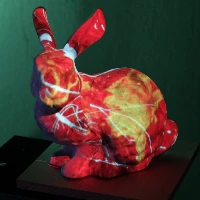
EpipolarNVS: leveraging on Epipolar geometry for single-image Novel View Synthesis
Novel-view synthesis (NVS) can be tackled through different approaches, depending on the general setting: a single source image to a short video sequence, exact or noisy camera pose information, 3D-based information such as point clouds etc. The most challenging scenario, the one where we stand in this work, only considers a unique source image to generate a novel one from another viewpoint. However, in such a tricky situation, the latest learning-based solutions often struggle to integrate the camera viewpoint transformation. Indeed, the extrinsic information is often passed as-is, through a low-dimensional vector. It might even occur that such a camera pose, when parametrized as Euler angles, is quantized through a one-hot representation. This vanilla encoding choice prevents the learnt architecture from inferring novel views on a continuous basis (from a camera pose perspective). We claim it exists an elegant way to better encode relative camera pose, by leveraging 3D-related concepts such as the epipolar constraint. We, therefore, introduce an innovative method that encodes the viewpoint transformation as a 2D feature image. Such a camera encoding strategy gives meaningful insights to the network regarding how the camera has moved in space between the two views. By encoding the camera pose information as a finite number of coloured epipolar lines, we demonstrate through our experiments that our strategy outperforms vanilla encoding.

VGGT-SLAM: Dense RGB SLAM Optimized on the SL(4) Manifold
We present VGGT-SLAM, a dense RGB SLAM system constructed by incrementally and globally aligning submaps created from the feed-forward scene reconstruction approach VGGT using only uncalibrated monocular cameras. While related works align submaps using similarity transforms (i.e., translation, rotation, and scale), we show that such approaches are inadequate in the case of uncalibrated cameras. In particular, we revisit the idea of reconstruction ambiguity, where given a set of uncalibrated cameras with no assumption on the camera motion or scene structure, the scene can only be reconstructed up to a 15-degrees-of-freedom projective transformation of the true geometry. This inspires us to recover a consistent scene reconstruction across submaps by optimizing over the SL(4) manifold, thus estimating 15-degrees-of-freedom homography transforms between sequential submaps while accounting for potential loop closure constraints. As verified by extensive experiments, we demonstrate that VGGT-SLAM achieves improved map quality using long video sequences that are infeasible for VGGT due to its high GPU requirements.
Deep Learning for Camera Calibration and Beyond: A Survey
Camera calibration involves estimating camera parameters to infer geometric features from captured sequences, which is crucial for computer vision and robotics. However, conventional calibration is laborious and requires dedicated collection. Recent efforts show that learning-based solutions have the potential to be used in place of the repeatability works of manual calibrations. Among these solutions, various learning strategies, networks, geometric priors, and datasets have been investigated. In this paper, we provide a comprehensive survey of learning-based camera calibration techniques, by analyzing their strengths and limitations. Our main calibration categories include the standard pinhole camera model, distortion camera model, cross-view model, and cross-sensor model, following the research trend and extended applications. As there is no unified benchmark in this community, we collect a holistic calibration dataset that can serve as a public platform to evaluate the generalization of existing methods. It comprises both synthetic and real-world data, with images and videos captured by different cameras in diverse scenes. Toward the end of this paper, we discuss the challenges and provide further research directions. To our knowledge, this is the first survey for the learning-based camera calibration (spanned 10 years). The summarized methods, datasets, and benchmarks are available and will be regularly updated at https://github.com/KangLiao929/Awesome-Deep-Camera-Calibration.


AnyCalib: On-Manifold Learning for Model-Agnostic Single-View Camera Calibration
We present AnyCalib, a method for calibrating the intrinsic parameters of a camera from a single in-the-wild image, that is agnostic to the camera model. Current methods are predominantly tailored to specific camera models and/or require extrinsic cues, such as the direction of gravity, to be visible in the image. In contrast, we argue that the perspective and distortion cues inherent in images are sufficient for model-agnostic camera calibration. To demonstrate this, we frame the calibration process as the regression of the rays corresponding to each pixel. We show, for the first time, that this intermediate representation allows for a closed-form recovery of the intrinsics for a wide range of camera models, including but not limited to: pinhole, Brown-Conrady and Kannala-Brandt. Our approach also applies to edited -- cropped and stretched -- images. Experimentally, we demonstrate that AnyCalib consistently outperforms alternative methods, including 3D foundation models, despite being trained on orders of magnitude less data. Code is available at https://github.com/javrtg/AnyCalib.

PROFusion: Robust and Accurate Dense Reconstruction via Camera Pose Regression and Optimization
Real-time dense scene reconstruction during unstable camera motions is crucial for robotics, yet current RGB-D SLAM systems fail when cameras experience large viewpoint changes, fast motions, or sudden shaking. Classical optimization-based methods deliver high accuracy but fail with poor initialization during large motions, while learning-based approaches provide robustness but lack sufficient accuracy for dense reconstruction. We address this challenge through a combination of learning-based initialization with optimization-based refinement. Our method employs a camera pose regression network to predict metric-aware relative poses from consecutive RGB-D frames, which serve as reliable starting points for a randomized optimization algorithm that further aligns depth images with the scene geometry. Extensive experiments demonstrate promising results: our approach outperforms the best competitor on challenging benchmarks, while maintaining comparable accuracy on stable motion sequences. The system operates in real-time, showcasing that combining simple and principled techniques can achieve both robustness for unstable motions and accuracy for dense reconstruction. Project page: https://github.com/siyandong/PROFusion.

The 8-Point Algorithm as an Inductive Bias for Relative Pose Prediction by ViTs
We present a simple baseline for directly estimating the relative pose (rotation and translation, including scale) between two images. Deep methods have recently shown strong progress but often require complex or multi-stage architectures. We show that a handful of modifications can be applied to a Vision Transformer (ViT) to bring its computations close to the Eight-Point Algorithm. This inductive bias enables a simple method to be competitive in multiple settings, often substantially improving over the state of the art with strong performance gains in limited data regimes.
Geo-Align: Video Generation Alignment via Metric Geometry Reward
Camera-controlled video generation has achieved remarkable progress in recent years. However, existing video-to-video re-rendering methods primarily rely on Supervised Fine-Tuning using synthetic datasets. At present, there is an extreme scarcity of synchronized, multi-view real-world video data. Consequently, the prevailing paradigm often exhibits limited generalization when processing out-of-distribution real-world videos, with models struggling to accurately adhere to physical scales and camera trajectories. To bridge this gap, we propose Geo-Align, the first Reinforcement Learning framework specifically designed for camera-controlled video re-rendering. Built upon a pretrained model, we optimize the model through a scale-aware perceptual reward mechanism. Specifically, we introduce a metric 3D estimator to extract precise camera trajectories from generated videos, explicitly penalizing deviations in rotation and translation. Furthermore, we meticulously designed a data pipeline strategy based on real-world conditioning videos and target camera trajectories derived from synthetic data, eliminating the reliance on paired data. Extensive experiments demonstrate that Geo-Align consistently outperforms existing supervised learning baselines in both precise camera controllability and visual fidelity, indicating the effectiveness of our method.

CamCtrl3D: Single-Image Scene Exploration with Precise 3D Camera Control
We propose a method for generating fly-through videos of a scene, from a single image and a given camera trajectory. We build upon an image-to-video latent diffusion model. We condition its UNet denoiser on the camera trajectory, using four techniques. (1) We condition the UNet's temporal blocks on raw camera extrinsics, similar to MotionCtrl. (2) We use images containing camera rays and directions, similar to CameraCtrl. (3) We reproject the initial image to subsequent frames and use the resulting video as a condition. (4) We use 2D<=>3D transformers to introduce a global 3D representation, which implicitly conditions on the camera poses. We combine all conditions in a ContolNet-style architecture. We then propose a metric that evaluates overall video quality and the ability to preserve details with view changes, which we use to analyze the trade-offs of individual and combined conditions. Finally, we identify an optimal combination of conditions. We calibrate camera positions in our datasets for scale consistency across scenes, and we train our scene exploration model, CamCtrl3D, demonstrating state-of-theart results.
Perspective Fields for Single Image Camera Calibration
Geometric camera calibration is often required for applications that understand the perspective of the image. We propose perspective fields as a representation that models the local perspective properties of an image. Perspective Fields contain per-pixel information about the camera view, parameterized as an up vector and a latitude value. This representation has a number of advantages as it makes minimal assumptions about the camera model and is invariant or equivariant to common image editing operations like cropping, warping, and rotation. It is also more interpretable and aligned with human perception. We train a neural network to predict Perspective Fields and the predicted Perspective Fields can be converted to calibration parameters easily. We demonstrate the robustness of our approach under various scenarios compared with camera calibration-based methods and show example applications in image compositing.

Reloc3r: Large-Scale Training of Relative Camera Pose Regression for Generalizable, Fast, and Accurate Visual Localization
Visual localization aims to determine the camera pose of a query image relative to a database of posed images. In recent years, deep neural networks that directly regress camera poses have gained popularity due to their fast inference capabilities. However, existing methods struggle to either generalize well to new scenes or provide accurate camera pose estimates. To address these issues, we present Reloc3r, a simple yet effective visual localization framework. It consists of an elegantly designed relative pose regression network, and a minimalist motion averaging module for absolute pose estimation. Trained on approximately 8 million posed image pairs, Reloc3r achieves surprisingly good performance and generalization ability. We conduct extensive experiments on 6 public datasets, consistently demonstrating the effectiveness and efficiency of the proposed method. It provides high-quality camera pose estimates in real time and generalizes to novel scenes. Code, weights, and data at: https://github.com/ffrivera0/reloc3r.
Visual Correspondence Hallucination
Given a pair of partially overlapping source and target images and a keypoint in the source image, the keypoint's correspondent in the target image can be either visible, occluded or outside the field of view. Local feature matching methods are only able to identify the correspondent's location when it is visible, while humans can also hallucinate its location when it is occluded or outside the field of view through geometric reasoning. In this paper, we bridge this gap by training a network to output a peaked probability distribution over the correspondent's location, regardless of this correspondent being visible, occluded, or outside the field of view. We experimentally demonstrate that this network is indeed able to hallucinate correspondences on pairs of images captured in scenes that were not seen at training-time. We also apply this network to an absolute camera pose estimation problem and find it is significantly more robust than state-of-the-art local feature matching-based competitors.

Unveiling the Value of Motion for Cinematic Camera Trajectories
Cinematic camera motion is a fundamental storytelling tool, defined not only by where the camera is positioned in the scene, but also by how it moves in terms of direction and speed. Recent work on camera trajectory generation and alignment to text relies on pose-centric representations. While in principle a network could derive direction of movement and speed, we find that in practice this might not happen. In fact, in this paper we discover that decomposing the camera trajectory representation from the traditional per-frame poses to direction and speed has surprising benefits across multiple tasks, including trajectory-to-text alignment as well as text-to-trajectory generation. To accurately evaluate the former, we introduce a simple and reliable protocol that overcomes the limitations of prior evaluation baselines. For the latter, building on this representational insight, we propose a novel generative model for camera trajectories, CineGEN, that achieves superior performance across a variety of metrics. We also propose a novel dataset, CineScript, containing movie clips that are enriched with scene descriptions as well as higher-level metadata. This novel data allows us to test models' ability to capture high-level cinematographic information. We show that, despite its simplicity, representing camera trajectories through direction and speed not only helps numerically to achieve better alignment and generation, but also inherently encodes complex directorial intent.
ORBIT++: Benchmarking SfM in the Wild with 360° Video
Structure-from-Motion (SfM) is a cornerstone of 3D perception, yet current methods often fail when applied to complex videos involving challenging camera motions or dynamic scenes. Compounding the problem, the field lacks reliable ground-truth benchmarks for such difficult scenarios, making it hard to gauge real-world progress or to pinpoint where improvements are most needed. To address this gap, we introduce a new benchmark for evaluating camera pose estimation. Our key insight is to leverage online panoramic 360° video as a source of data from which to construct challenging clips, while still enabling robust ground-truth trajectory recovery. The panoramic nature of these videos provides richer visual context for tracking camera motion, even when parts of the view are affected by blur, motion, or dynamic objects. After tracking camera motion across full 360° videos, we crop and reproject selected portions to generate perspective-view clips that serve as our benchmark, called ORBIT. Experiments show that COLMAP, as well as recent optimization-based and feed-forward SfM methods struggle to accurately estimate camera poses on our benchmark. Hence, ORBIT provides a valuable testbed where researchers can meaningfully measure progress on truly challenging, real-world SfM problems.
Monocular Visual Odometry without Calibration or Test-time Optimization
The most accurate monocular visual odometry systems require known camera intrinsics, refine their estimates with test-time optimization, and recover trajectories only up to an unknown factor. Systems built on large 3D models need no intrinsics, but they remain considerably less accurate and slower for odometry. Direct pose regression avoids all these requirements, yet it has not matched either approach's accuracy. We revisit this formulation with a transformer that predicts relative camera poses together with separate rotation and translation confidences over overlapping image windows, supervised by camera poses alone. A confidence-weighted module then aggregates the overlapping predictions into a single trajectory. The resulting method, CalfVO, needs no intrinsics, no bundle adjustment, and no loop closure, and it recovers scale from learned priors, accurately enough that it is evaluated without any alignment to the ground truth. Across five benchmarks, it is the most accurate calibration-free method on every metric we report, and it runs at 53 FPS, faster than every baseline.
RePAST: Relative Pose Attention Scene Representation Transformer
The Scene Representation Transformer (SRT) is a recent method to render novel views at interactive rates. Since SRT uses camera poses with respect to an arbitrarily chosen reference camera, it is not invariant to the order of the input views. As a result, SRT is not directly applicable to large-scale scenes where the reference frame would need to be changed regularly. In this work, we propose Relative Pose Attention SRT (RePAST): Instead of fixing a reference frame at the input, we inject pairwise relative camera pose information directly into the attention mechanism of the Transformers. This leads to a model that is by definition invariant to the choice of any global reference frame, while still retaining the full capabilities of the original method. Empirical results show that adding this invariance to the model does not lead to a loss in quality. We believe that this is a step towards applying fully latent transformer-based rendering methods to large-scale scenes.
ShotVerse: Advancing Cinematic Camera Control for Text-Driven Multi-Shot Video Creation
Text-driven video generation has democratized film creation, but camera control in cinematic multi-shot scenarios remains a significant block. Implicit textual prompts lack precision, while explicit trajectory conditioning imposes prohibitive manual overhead and often triggers execution failures in current models. To overcome this bottleneck, we propose a data-centric paradigm shift, positing that aligned (Caption, Trajectory, Video) triplets form an inherent joint distribution that can connect automated plotting and precise execution. Guided by this insight, we present ShotVerse, a "Plan-then-Control" framework that decouples generation into two collaborative agents: a VLM (Vision-Language Model)-based Planner that leverages spatial priors to obtain cinematic, globally aligned trajectories from text, and a Controller that renders these trajectories into multi-shot video content via a camera adapter. Central to our approach is the construction of a data foundation: we design an automated multi-shot camera calibration pipeline aligns disjoint single-shot trajectories into a unified global coordinate system. This facilitates the curation of ShotVerse-Bench, a high-fidelity cinematic dataset with a three-track evaluation protocol that serves as the bedrock for our framework. Extensive experiments demonstrate that ShotVerse effectively bridges the gap between unreliable textual control and labor-intensive manual plotting, achieving superior cinematic aesthetics and generating multi-shot videos that are both camera-accurate and cross-shot consistent.

CamMimic: Zero-Shot Image To Camera Motion Personalized Video Generation Using Diffusion Models
We introduce CamMimic, an innovative algorithm tailored for dynamic video editing needs. It is designed to seamlessly transfer the camera motion observed in a given reference video onto any scene of the user's choice in a zero-shot manner without requiring any additional data. Our algorithm achieves this using a two-phase strategy by leveraging a text-to-video diffusion model. In the first phase, we develop a multi-concept learning method using a combination of LoRA layers and an orthogonality loss to capture and understand the underlying spatial-temporal characteristics of the reference video as well as the spatial features of the user's desired scene. The second phase proposes a unique homography-based refinement strategy to enhance the temporal and spatial alignment of the generated video. We demonstrate the efficacy of our method through experiments conducted on a dataset containing combinations of diverse scenes and reference videos containing a variety of camera motions. In the absence of an established metric for assessing camera motion transfer between unrelated scenes, we propose CameraScore, a novel metric that utilizes homography representations to measure camera motion similarity between the reference and generated videos. Extensive quantitative and qualitative evaluations demonstrate that our approach generates high-quality, motion-enhanced videos. Additionally, a user study reveals that 70.31% of participants preferred our method for scene preservation, while 90.45% favored it for motion transfer. We hope this work lays the foundation for future advancements in camera motion transfer across different scenes.
360Anything: Geometry-Free Lifting of Images and Videos to 360°
Lifting perspective images and videos to 360° panoramas enables immersive 3D world generation. Existing approaches often rely on explicit geometric alignment between the perspective and the equirectangular projection (ERP) space. Yet, this requires known camera metadata, obscuring the application to in-the-wild data where such calibration is typically absent or noisy. We propose 360Anything, a geometry-free framework built upon pre-trained diffusion transformers. By treating the perspective input and the panorama target simply as token sequences, 360Anything learns the perspective-to-equirectangular mapping in a purely data-driven way, eliminating the need for camera information. Our approach achieves state-of-the-art performance on both image and video perspective-to-360° generation, outperforming prior works that use ground-truth camera information. We also trace the root cause of the seam artifacts at ERP boundaries to zero-padding in the VAE encoder, and introduce Circular Latent Encoding to facilitate seamless generation. Finally, we show competitive results in zero-shot camera FoV and orientation estimation benchmarks, demonstrating 360Anything's deep geometric understanding and broader utility in computer vision tasks. Additional results are available at https://360anything.github.io/.

Robust Frame-to-Frame Camera Rotation Estimation in Crowded Scenes
We present an approach to estimating camera rotation in crowded, real-world scenes from handheld monocular video. While camera rotation estimation is a well-studied problem, no previous methods exhibit both high accuracy and acceptable speed in this setting. Because the setting is not addressed well by other datasets, we provide a new dataset and benchmark, with high-accuracy, rigorously verified ground truth, on 17 video sequences. Methods developed for wide baseline stereo (e.g., 5-point methods) perform poorly on monocular video. On the other hand, methods used in autonomous driving (e.g., SLAM) leverage specific sensor setups, specific motion models, or local optimization strategies (lagging batch processing) and do not generalize well to handheld video. Finally, for dynamic scenes, commonly used robustification techniques like RANSAC require large numbers of iterations, and become prohibitively slow. We introduce a novel generalization of the Hough transform on SO(3) to efficiently and robustly find the camera rotation most compatible with optical flow. Among comparably fast methods, ours reduces error by almost 50\% over the next best, and is more accurate than any method, irrespective of speed. This represents a strong new performance point for crowded scenes, an important setting for computer vision. The code and the dataset are available at https://fabiendelattre.com/robust-rotation-estimation.
Vanishing Point Estimation in Uncalibrated Images with Prior Gravity Direction
We tackle the problem of estimating a Manhattan frame, i.e. three orthogonal vanishing points, and the unknown focal length of the camera, leveraging a prior vertical direction. The direction can come from an Inertial Measurement Unit that is a standard component of recent consumer devices, e.g., smartphones. We provide an exhaustive analysis of minimal line configurations and derive two new 2-line solvers, one of which does not suffer from singularities affecting existing solvers. Additionally, we design a new non-minimal method, running on an arbitrary number of lines, to boost the performance in local optimization. Combining all solvers in a hybrid robust estimator, our method achieves increased accuracy even with a rough prior. Experiments on synthetic and real-world datasets demonstrate the superior accuracy of our method compared to the state of the art, while having comparable runtimes. We further demonstrate the applicability of our solvers for relative rotation estimation. The code is available at https://github.com/cvg/VP-Estimation-with-Prior-Gravity.


Self-Supervised Learning of Depth and Camera Motion from 360° Videos
As 360{\deg} cameras become prevalent in many autonomous systems (e.g., self-driving cars and drones), efficient 360{\deg} perception becomes more and more important. We propose a novel self-supervised learning approach for predicting the omnidirectional depth and camera motion from a 360{\deg} video. In particular, starting from the SfMLearner, which is designed for cameras with normal field-of-view, we introduce three key features to process 360{\deg} images efficiently. Firstly, we convert each image from equirectangular projection to cubic projection in order to avoid image distortion. In each network layer, we use Cube Padding (CP), which pads intermediate features from adjacent faces, to avoid image boundaries. Secondly, we propose a novel "spherical" photometric consistency constraint on the whole viewing sphere. In this way, no pixel will be projected outside the image boundary which typically happens in images with normal field-of-view. Finally, rather than naively estimating six independent camera motions (i.e., naively applying SfM-Learner to each face on a cube), we propose a novel camera pose consistency loss to ensure the estimated camera motions reaching consensus. To train and evaluate our approach, we collect a new PanoSUNCG dataset containing a large amount of 360{\deg} videos with groundtruth depth and camera motion. Our approach achieves state-of-the-art depth prediction and camera motion estimation on PanoSUNCG with faster inference speed comparing to equirectangular. In real-world indoor videos, our approach can also achieve qualitatively reasonable depth prediction by acquiring model pre-trained on PanoSUNCG.
From Rays to Projections: Better Inputs for Feed-Forward View Synthesis
Feed-forward view synthesis models predict a novel view in a single pass with minimal 3D inductive bias. Existing works encode cameras as Plücker ray maps, which tie predictions to the arbitrary world coordinate gauge and make them sensitive to small camera transformations, thereby undermining geometric consistency. In this paper, we ask what inputs best condition a model for robust and consistent view synthesis. We propose projective conditioning, which replaces raw camera parameters with a target-view projective cue that provides a stable 2D input. This reframes the task from a brittle geometric regression problem in ray space to a well-conditioned target-view image-to-image translation problem. Additionally, we introduce a masked autoencoding pretraining strategy tailored to this cue, enabling the use of large-scale uncalibrated data for pretraining. Our method shows improved fidelity and stronger cross-view consistency compared to ray-conditioned baselines on our view-consistency benchmark. It also achieves state-of-the-art quality on standard novel view synthesis benchmarks.
Selfi: Self Improving Reconstruction Engine via 3D Geometric Feature Alignment
Novel View Synthesis (NVS) has traditionally relied on models with explicit 3D inductive biases combined with known camera parameters from Structure-from-Motion (SfM) beforehand. Recent vision foundation models like VGGT take an orthogonal approach -- 3D knowledge is gained implicitly through training data and loss objectives, enabling feed-forward prediction of both camera parameters and 3D representations directly from a set of uncalibrated images. While flexible, VGGT features lack explicit multi-view geometric consistency, and we find that improving such 3D feature consistency benefits both NVS and pose estimation tasks. We introduce Selfi, a self-improving 3D reconstruction pipeline via feature alignment, transforming a VGGT backbone into a high-fidelity 3D reconstruction engine by leveraging its own outputs as pseudo-ground-truth. Specifically, we train a lightweight feature adapter using a reprojection-based consistency loss, which distills VGGT outputs into a new geometrically-aligned feature space that captures spatial proximity in 3D. This enables state-of-the-art performance in both NVS and camera pose estimation, demonstrating that feature alignment is a highly beneficial step for downstream 3D reasoning.

CAMPARI: Camera-Aware Decomposed Generative Neural Radiance Fields
Tremendous progress in deep generative models has led to photorealistic image synthesis. While achieving compelling results, most approaches operate in the two-dimensional image domain, ignoring the three-dimensional nature of our world. Several recent works therefore propose generative models which are 3D-aware, i.e., scenes are modeled in 3D and then rendered differentiably to the image plane. This leads to impressive 3D consistency, but incorporating such a bias comes at a price: the camera needs to be modeled as well. Current approaches assume fixed intrinsics and a predefined prior over camera pose ranges. As a result, parameter tuning is typically required for real-world data, and results degrade if the data distribution is not matched. Our key hypothesis is that learning a camera generator jointly with the image generator leads to a more principled approach to 3D-aware image synthesis. Further, we propose to decompose the scene into a background and foreground model, leading to more efficient and disentangled scene representations. While training from raw, unposed image collections, we learn a 3D- and camera-aware generative model which faithfully recovers not only the image but also the camera data distribution. At test time, our model generates images with explicit control over the camera as well as the shape and appearance of the scene.
VisIRNet: Deep Image Alignment for UAV-taken Visible and Infrared Image Pairs
This paper proposes a deep learning based solution for multi-modal image alignment regarding UAV-taken images. Many recently proposed state-of-the-art alignment techniques rely on using Lucas-Kanade (LK) based solutions for a successful alignment. However, we show that we can achieve state of the art results without using LK-based methods. Our approach carefully utilizes a two-branch based convolutional neural network (CNN) based on feature embedding blocks. We propose two variants of our approach, where in the first variant (ModelA), we directly predict the new coordinates of only the four corners of the image to be aligned; and in the second one (ModelB), we predict the homography matrix directly. Applying alignment on the image corners forces algorithm to match only those four corners as opposed to computing and matching many (key)points, since the latter may cause many outliers, yielding less accurate alignment. We test our proposed approach on four aerial datasets and obtain state of the art results, when compared to the existing recent deep LK-based architectures.
Correspondences of the Third Kind: Camera Pose Estimation from Object Reflection
Computer vision has long relied on two kinds of correspondences: pixel correspondences in images and 3D correspondences on object surfaces. Is there another kind, and if there is, what can they do for us? In this paper, we introduce correspondences of the third kind we call reflection correspondences and show that they can help estimate camera pose by just looking at objects without relying on the background. Reflection correspondences are point correspondences in the reflected world, i.e., the scene reflected by the object surface. The object geometry and reflectance alters the scene geometrically and radiometrically, respectively, causing incorrect pixel correspondences. Geometry recovered from each image is also hampered by distortions, namely generalized bas-relief ambiguity, leading to erroneous 3D correspondences. We show that reflection correspondences can resolve the ambiguities arising from these distortions. We introduce a neural correspondence estimator and a RANSAC algorithm that fully leverages all three kinds of correspondences for robust and accurate joint camera pose and object shape estimation just from the object appearance. The method expands the horizon of numerous downstream tasks, including camera pose estimation for appearance modeling (e.g., NeRF) and motion estimation of reflective objects (e.g., cars on the road), to name a few, as it relieves the requirement of overlapping background.
StereoGenBench: A Synthetic Multi-Camera Benchmark for Stereo Generation under Controlled Baseline Regimes
Stereo image and video generation, stereo geometry estimation, and condition-controlled view synthesis require paired data in which the variables that determine binocular geometry -- camera baseline, intrinsics, scene depth, and camera motion -- are known and controllable. Existing stereo resources provide subsets of these variables, but resources commonly used for stereo generation evaluation do not, to our knowledge, provide scene-paired, calibrated multi-baseline right-view ground truth with jointly recorded intrinsics, dense metric depth, and per-frame poses in a single controlled source. We introduce StereoGenBench, a synthetic Unreal Engine benchmark designed to make baseline-regime sensitivity and target-camera consistency measurable under matched scene content. Each scene is rendered with a rigid six-camera lateral array, yielding up to 15 calibrated view pairs; adjacent baselines are sampled from inter-pupillary to wide-baseline regimes; focal length is sampled independently; and every view is released with RGB, metric depth, intrinsics, per-pair baselines, and per-frame poses. The splits include two evaluation families for narrow and wide baseline regimes and a train-only family for broader all-pairs coverage. We release the dataset, evaluation code, reference results, Croissant metadata, and generation code/configuration for extension with compatible assets. The dataset is available at https://huggingface.co/datasets/stereo-dataset/stereo-dataset

TiP4GEN: Text to Immersive Panorama 4D Scene Generation
With the rapid advancement and widespread adoption of VR/AR technologies, there is a growing demand for the creation of high-quality, immersive dynamic scenes. However, existing generation works predominantly concentrate on the creation of static scenes or narrow perspective-view dynamic scenes, falling short of delivering a truly 360-degree immersive experience from any viewpoint. In this paper, we introduce TiP4GEN, an advanced text-to-dynamic panorama scene generation framework that enables fine-grained content control and synthesizes motion-rich, geometry-consistent panoramic 4D scenes. TiP4GEN integrates panorama video generation and dynamic scene reconstruction to create 360-degree immersive virtual environments. For video generation, we introduce a Dual-branch Generation Model consisting of a panorama branch and a perspective branch, responsible for global and local view generation, respectively. A bidirectional cross-attention mechanism facilitates comprehensive information exchange between the branches. For scene reconstruction, we propose a Geometry-aligned Reconstruction Model based on 3D Gaussian Splatting. By aligning spatial-temporal point clouds using metric depth maps and initializing scene cameras with estimated poses, our method ensures geometric consistency and temporal coherence for the reconstructed scenes. Extensive experiments demonstrate the effectiveness of our proposed designs and the superiority of TiP4GEN in generating visually compelling and motion-coherent dynamic panoramic scenes. Our project page is at https://ke-xing.github.io/TiP4GEN/.
DualCamCtrl: Dual-Branch Diffusion Model for Geometry-Aware Camera-Controlled Video Generation
This paper presents DualCamCtrl, a novel end-to-end diffusion model for camera-controlled video generation. Recent works have advanced this field by representing camera poses as ray-based conditions, yet they often lack sufficient scene understanding and geometric awareness. DualCamCtrl specifically targets this limitation by introducing a dual-branch framework that mutually generates camera-consistent RGB and depth sequences. To harmonize these two modalities, we further propose the Semantic Guided Mutual Alignment (SIGMA) mechanism, which performs RGB-depth fusion in a semantics-guided and mutually reinforced manner. These designs collectively enable DualCamCtrl to better disentangle appearance and geometry modeling, generating videos that more faithfully adhere to the specified camera trajectories. Additionally, we analyze and reveal the distinct influence of depth and camera poses across denoising stages and further demonstrate that early and late stages play complementary roles in forming global structure and refining local details. Extensive experiments demonstrate that DualCamCtrl achieves more consistent camera-controlled video generation, with over 40\% reduction in camera motion errors compared with prior methods. Our project page: https://soyouthinkyoucantell.github.io/dualcamctrl-page/


MonoFusion: Sparse-View 4D Reconstruction via Monocular Fusion
We address the problem of dynamic scene reconstruction from sparse-view videos. Prior work often requires dense multi-view captures with hundreds of calibrated cameras (e.g. Panoptic Studio). Such multi-view setups are prohibitively expensive to build and cannot capture diverse scenes in-the-wild. In contrast, we aim to reconstruct dynamic human behaviors, such as repairing a bike or dancing, from a small set of sparse-view cameras with complete scene coverage (e.g. four equidistant inward-facing static cameras). We find that dense multi-view reconstruction methods struggle to adapt to this sparse-view setup due to limited overlap between viewpoints. To address these limitations, we carefully align independent monocular reconstructions of each camera to produce time- and view-consistent dynamic scene reconstructions. Extensive experiments on PanopticStudio and Ego-Exo4D demonstrate that our method achieves higher quality reconstructions than prior art, particularly when rendering novel views. Code, data, and data-processing scripts are available on https://github.com/ImNotPrepared/MonoFusion.


Seeing without Pixels: Perception from Camera Trajectories
Can one perceive a video's content without seeing its pixels, just from the camera trajectory-the path it carves through space? This paper is the first to systematically investigate this seemingly implausible question. Towards this end, we propose a contrastive learning framework to train CamFormer, a dedicated encoder that projects camera pose trajectories into a joint embedding space, aligning them with natural language. We find that, contrary to its apparent simplicity, the camera trajectory is a remarkably informative signal to uncover video content. In other words, "how you move" can indeed provide valuable cues about "what you are doing" (egocentric) or "observing" (exocentric). We demonstrate the versatility of our learned CamFormer embeddings on a diverse suite of downstream tasks, ranging from cross-modal alignment to classification and temporal analysis. Importantly, our representations are robust across diverse camera pose estimation methods, including both high-fidelity multi-sensored and standard RGB-only estimators. Our findings establish camera trajectory as a lightweight, robust, and versatile modality for perceiving video content.
Mitigating Perspective Distortion-induced Shape Ambiguity in Image Crops
Objects undergo varying amounts of perspective distortion as they move across a camera's field of view. Models for predicting 3D from a single image often work with crops around the object of interest and ignore the location of the object in the camera's field of view. We note that ignoring this location information further exaggerates the inherent ambiguity in making 3D inferences from 2D images and can prevent models from even fitting to the training data. To mitigate this ambiguity, we propose Intrinsics-Aware Positional Encoding (KPE), which incorporates information about the location of crops in the image and camera intrinsics. Experiments on three popular 3D-from-a-single-image benchmarks: depth prediction on NYU, 3D object detection on KITTI & nuScenes, and predicting 3D shapes of articulated objects on ARCTIC, show the benefits of KPE.

Dexterity-BEV: Aligning 3D World and Actions for Generalizable Robot Policies Learning
End-to-end manipulation policies, combined with web-scale pretrained Vision-Language Models (VLMs), show the promise for generalizable and dexterous robotic manipulation. However, they inherit two key limitations from 2D foundation models: 1) the reliance on 2D RGB inputs that ignores the intrinsically 3D nature of manipulation; and 2) the lack of spatial 3D alignment between input-output spaces as well as across diverse robot embodiments, camera setups, and trajectory datasets. In this paper, we present a series of contributions to address these issues. First, we introduce aligned vertex map and vertex spectrum -- a pixel-wise 3D representation that elevates 2D visual inputs to 3D, using camera calibration and optional depth. This novel input representation marries 3D awareness with the generalization of 2D large VLMs. Then, we propose to align the inputs and outputs of manipulation policies by expressing per-pixel 3D information of each camera view and robot actions to a shared coordinate. Based on this, we designate a canonical Bird's-Eye-View (BEV) alignment frame and innovatively propose to construct BEV images, producing a view-invariant representation robust to camera pose variations. To enable training and evaluation at scale, we develop a comprehensive data processing pipeline to perform such alignments; we also introduce a novel temporal alignment scheme for trajectories across diverse robots, human operators, and datasets. These contributions collectively mitigate input and output spatial-temporal misalignments, improving the consistency and generalization for real-world manipulation. Pretrained checkpoint, source code and data processing pipeline are available in https://hnuzhy.github.io/projects/Dex-BEV.
GVDepth: Zero-Shot Monocular Depth Estimation for Ground Vehicles based on Probabilistic Cue Fusion
Generalizing metric monocular depth estimation presents a significant challenge due to its ill-posed nature, while the entanglement between camera parameters and depth amplifies issues further, hindering multi-dataset training and zero-shot accuracy. This challenge is particularly evident in autonomous vehicles and mobile robotics, where data is collected with fixed camera setups, limiting the geometric diversity. Yet, this context also presents an opportunity: the fixed relationship between the camera and the ground plane imposes additional perspective geometry constraints, enabling depth regression via vertical image positions of objects. However, this cue is highly susceptible to overfitting, thus we propose a novel canonical representation that maintains consistency across varied camera setups, effectively disentangling depth from specific parameters and enhancing generalization across datasets. We also propose a novel architecture that adaptively and probabilistically fuses depths estimated via object size and vertical image position cues. A comprehensive evaluation demonstrates the effectiveness of the proposed approach on five autonomous driving datasets, achieving accurate metric depth estimation for varying resolutions, aspect ratios and camera setups. Notably, we achieve comparable accuracy to existing zero-shot methods, despite training on a single dataset with a single-camera setup.
PreciseCam: Precise Camera Control for Text-to-Image Generation
Images as an artistic medium often rely on specific camera angles and lens distortions to convey ideas or emotions; however, such precise control is missing in current text-to-image models. We propose an efficient and general solution that allows precise control over the camera when generating both photographic and artistic images. Unlike prior methods that rely on predefined shots, we rely solely on four simple extrinsic and intrinsic camera parameters, removing the need for pre-existing geometry, reference 3D objects, and multi-view data. We also present a novel dataset with more than 57,000 images, along with their text prompts and ground-truth camera parameters. Our evaluation shows precise camera control in text-to-image generation, surpassing traditional prompt engineering approaches. Our data, model, and code are publicly available at https://graphics.unizar.es/projects/PreciseCam2024.


Fine-Grained Cross-View Geo-Localization Using a Correlation-Aware Homography Estimator
In this paper, we introduce a novel approach to fine-grained cross-view geo-localization. Our method aligns a warped ground image with a corresponding GPS-tagged satellite image covering the same area using homography estimation. We first employ a differentiable spherical transform, adhering to geometric principles, to accurately align the perspective of the ground image with the satellite map. This transformation effectively places ground and aerial images in the same view and on the same plane, reducing the task to an image alignment problem. To address challenges such as occlusion, small overlapping range, and seasonal variations, we propose a robust correlation-aware homography estimator to align similar parts of the transformed ground image with the satellite image. Our method achieves sub-pixel resolution and meter-level GPS accuracy by mapping the center point of the transformed ground image to the satellite image using a homography matrix and determining the orientation of the ground camera using a point above the central axis. Operating at a speed of 30 FPS, our method outperforms state-of-the-art techniques, reducing the mean metric localization error by 21.3% and 32.4% in same-area and cross-area generalization tasks on the VIGOR benchmark, respectively, and by 34.4% on the KITTI benchmark in same-area evaluation.


Geometry-Guided Camera Motion Understanding in VideoLLMs
Camera motion is a fundamental geometric signal that shapes visual perception and cinematic style, yet current video-capable vision-language models (VideoLLMs) rarely represent it explicitly and often fail on fine-grained motion primitives. We address this gap with a framework of benchmarking, diagnosis, and injection. We curate CameraMotionDataset, a large-scale synthetic dataset with explicit camera control, formulate camera motion as constraint-aware multi-label recognition, and construct a VQA benchmark--CameraMotionVQA. Across diverse off-the-shelf VideoLLMs, we observe substantial errors in recognizing camera motion primitives. Probing experiments on a Qwen2.5-VL vision encoder suggest that camera motion cues are weakly represented, especially in deeper ViT blocks, helping explain the observed failure modes. To bridge this gap without costly training or fine-tuning, we propose a lightweight, model-agnostic pipeline that extracts geometric camera cues from 3D foundation models (3DFMs), predicts constrained motion primitives with a temporal classifier, and injects them into downstream VideoLLM inference via structured prompting. Experiments demonstrate improved motion recognition and more camera-aware model responses, highlighting geometry-driven cue extraction and structured prompting as practical steps toward a camera-aware VideoLLM and VLA system. The dataset and benchmark is publicly available at https://hf.co/datasets/fengyee/camera-motion-dataset-and-benchmark.
Learning to Make Keypoints Sub-Pixel Accurate
This work addresses the challenge of sub-pixel accuracy in detecting 2D local features, a cornerstone problem in computer vision. Despite the advancements brought by neural network-based methods like SuperPoint and ALIKED, these modern approaches lag behind classical ones such as SIFT in keypoint localization accuracy due to their lack of sub-pixel precision. We propose a novel network that enhances any detector with sub-pixel precision by learning an offset vector for detected features, thereby eliminating the need for designing specialized sub-pixel accurate detectors. This optimization directly minimizes test-time evaluation metrics like relative pose error. Through extensive testing with both nearest neighbors matching and the recent LightGlue matcher across various real-world datasets, our method consistently outperforms existing methods in accuracy. Moreover, it adds only around 7 ms to the time of a particular detector. The code is available at https://github.com/KimSinjeong/keypt2subpx .
Align3R: Aligned Monocular Depth Estimation for Dynamic Videos
Recent developments in monocular depth estimation methods enable high-quality depth estimation of single-view images but fail to estimate consistent video depth across different frames. Recent works address this problem by applying a video diffusion model to generate video depth conditioned on the input video, which is training-expensive and can only produce scale-invariant depth values without camera poses. In this paper, we propose a novel video-depth estimation method called Align3R to estimate temporal consistent depth maps for a dynamic video. Our key idea is to utilize the recent DUSt3R model to align estimated monocular depth maps of different timesteps. First, we fine-tune the DUSt3R model with additional estimated monocular depth as inputs for the dynamic scenes. Then, we apply optimization to reconstruct both depth maps and camera poses. Extensive experiments demonstrate that Align3R estimates consistent video depth and camera poses for a monocular video with superior performance than baseline methods.


iComMa: Inverting 3D Gaussian Splatting for Camera Pose Estimation via Comparing and Matching
We present a method named iComMa to address the 6D camera pose estimation problem in computer vision. Conventional pose estimation methods typically rely on the target's CAD model or necessitate specific network training tailored to particular object classes. Some existing methods have achieved promising results in mesh-free object and scene pose estimation by inverting the Neural Radiance Fields (NeRF). However, they still struggle with adverse initializations such as large rotations and translations. To address this issue, we propose an efficient method for accurate camera pose estimation by inverting 3D Gaussian Splatting (3DGS). Specifically, a gradient-based differentiable framework optimizes camera pose by minimizing the residual between the query image and the rendered image, requiring no training. An end-to-end matching module is designed to enhance the model's robustness against adverse initializations, while minimizing pixel-level comparing loss aids in precise pose estimation. Experimental results on synthetic and complex real-world data demonstrate the effectiveness of the proposed approach in challenging conditions and the accuracy of camera pose estimation.
Probing into Camera Control of Video Models
Video is a rich and scalable source of 3D/4D visual observations, and camera control is a key capability for video generation models to produce geometrically meaningful content. Existing approaches typically learn a mapping from camera motion to video using additional camera modules and paired data. However, such datasets are often limited in scale, diversity, and scene dynamics, which can bias the model toward a narrow output distribution and compromise the strong prior learned by the base model. These limitations motivate a different perspective on camera control. In this paper, we show that camera control need not be modeled as an implicit mapping problem, but can instead be treated as a form of geometric guidance that induces displacements across frames. Specifically, we reformulate camera control into a set of displacement fields and apply them via differentiable resampling of latent features during denoising. Our simple approach achieves effective camera control with minimal degradation across diverse quality metrics compared to fine-tuned baselines. Since our method is applicable to most video diffusion models without training, it can also serve as a probe to study the camera control capabilities of base models. Using this probe, we identify universal biases shared by representative video models, as well as disparities in their responses to camera control. Finally, we benchmark their performance in multi-view generation, offering insights into their potential for 3D/4D tasks.
PIVOT: A Multi-Trajectory Dataset and Testbed for Pose, Intrinsics, and Novel Viewpoint Evaluation in Real-World 3D Reconstruction
Neural radiance fields (NeRFs), 3D Gaussian Splatting (3DGS), and related novel-view synthesis methods are commonly evaluated under capture and reconstruction conditions cleaner than those encountered by robots, drones, and autonomous systems. Benchmarks often rely on reconstruction-friendly trajectories, optimized camera poses and intrinsics, and held-out views sampled from trajectories represented during training. These assumptions can obscure performance with measured poses, reusable camera calibration, and structurally different camera paths. We introduce PIVOT (Pose, Intrinsics and Viewpoint Oriented Testbed), a multi-trajectory dataset, processing pipeline, and evaluation framework for independently studying these factors. PIVOT captures each scene using diverse camera trajectories and retains, where available, both sensor-derived measured poses and COLMAP-optimized poses, together with calibrated and optimized camera intrinsics. It defines three benchmark families: (1) seen versus unseen trajectory novel-view generalization, (2) measured versus optimized pose sensitivity, and (3) calibrated versus optimized intrinsics sensitivity. We also introduce a directed pose-space Chamfer distance to quantify how well training poses cover an evaluation trajectory. PIVOT v1 contains five real-world scenes captured with a DJI Mini 4 Pro and provides an open processing and Nerfstudio-based evaluation toolchain. Benchmark results show a consistent quality gap between held-out views on represented trajectories and unseen trajectories, as well as substantial sensitivity to pose source and camera intrinsics.
Parallax Portrait Matting
Image matting is highly ill-posed, especially when both the foreground and background are richly textured. While single-image matting methods learn strong priors from data, they often struggle on these challenging cases. Existing approaches improve results by requiring additional signals such as green screens, polarized lighting, or clean background images, but these typically rely on specialized capture setups. We present Parallax Portrait Matting, a practical two-frame matting method that uses a second image captured with slight viewpoint change. Such a setting arises naturally in burst photography, where small camera motion induces foreground-background parallax and provides complementary observations for matting. Our pipeline estimates trimaps and foreground/background motion, then constructs aligned views for prediction. To handle imperfect motion estimation, the network uses the background-aligned pair for direct fusion and the foreground-aligned cue through cross-attention for error compensation. Experiments show that our method recovers finer details and more accurate foreground colors than strong single-image matting baselines on challenging portrait cases.
Möbius Transform for Mitigating Perspective Distortions in Representation Learning
Perspective distortion (PD) causes unprecedented changes in shape, size, orientation, angles, and other spatial relationships of visual concepts in images. Precisely estimating camera intrinsic and extrinsic parameters is a challenging task that prevents synthesizing perspective distortion. Non-availability of dedicated training data poses a critical barrier to developing robust computer vision methods. Additionally, distortion correction methods make other computer vision tasks a multi-step approach and lack performance. In this work, we propose mitigating perspective distortion (MPD) by employing a fine-grained parameter control on a specific family of M\"obius transform to model real-world distortion without estimating camera intrinsic and extrinsic parameters and without the need for actual distorted data. Also, we present a dedicated perspectively distorted benchmark dataset, ImageNet-PD, to benchmark the robustness of deep learning models against this new dataset. The proposed method outperforms existing benchmarks, ImageNet-E and ImageNet-X. Additionally, it significantly improves performance on ImageNet-PD while consistently performing on standard data distribution. Notably, our method shows improved performance on three PD-affected real-world applications crowd counting, fisheye image recognition, and person re-identification and one PD-affected challenging CV task: object detection. The source code, dataset, and models are available on the project webpage at https://prakashchhipa.github.io/projects/mpd.

SparsePose: Sparse-View Camera Pose Regression and Refinement
Camera pose estimation is a key step in standard 3D reconstruction pipelines that operate on a dense set of images of a single object or scene. However, methods for pose estimation often fail when only a few images are available because they rely on the ability to robustly identify and match visual features between image pairs. While these methods can work robustly with dense camera views, capturing a large set of images can be time-consuming or impractical. We propose SparsePose for recovering accurate camera poses given a sparse set of wide-baseline images (fewer than 10). The method learns to regress initial camera poses and then iteratively refine them after training on a large-scale dataset of objects (Co3D: Common Objects in 3D). SparsePose significantly outperforms conventional and learning-based baselines in recovering accurate camera rotations and translations. We also demonstrate our pipeline for high-fidelity 3D reconstruction using only 5-9 images of an object.
TrajVG: 3D Trajectory-Coupled Visual Geometry Learning
Feed-forward multi-frame 3D reconstruction models often degrade on videos with object motion. Global-reference becomes ambiguous under multiple motions, while the local pointmap relies heavily on estimated relative poses and can drift, causing cross-frame misalignment and duplicated structures. We propose TrajVG, a reconstruction framework that makes cross-frame 3D correspondence an explicit prediction by estimating camera-coordinate 3D trajectories. We couple sparse trajectories, per-frame local point maps, and relative camera poses with geometric consistency objectives: (i) bidirectional trajectory-pointmap consistency with controlled gradient flow, and (ii) a pose consistency objective driven by static track anchors that suppresses gradients from dynamic regions. To scale training to in-the-wild videos where 3D trajectory labels are scarce, we reformulate the same coupling constraints into self-supervised objectives using only pseudo 2D tracks, enabling unified training with mixed supervision. Extensive experiments across 3D tracking, pose estimation, pointmap reconstruction, and video depth show that TrajVG surpasses the current feedforward performance baseline.
Cambrian-P: Pose-Grounded Video Understanding
Camera pose matters. The position and orientation of each viewpoint define a shared spatial coordinate frame that relates observations across video frames. Yet this signal is largely absent from multimodal LLMs (MLLMs) for video understanding, which process frames as isolated 2D snapshots, instead of the persistent scene humans perceive. We revisit pose as a lightweight supervisory signal and introduce Cambrian-P, a video MLLM augmented with per-frame learnable camera tokens and a pose regression head. With a carefully designed sampling scheme, the model achieves substantial gains of 4.5-6.5% on spatial reasoning benchmarks such as VSI-Bench, generalizes across eight additional spatial and general video QA benchmarks, and, as a byproduct, achieves state of the art streaming pose estimation on ScanNet. Surprisingly, training on pseudo-annotated poses from in-the-wild video further improves general video QA benchmarks, showing pose helps beyond spatial reasoning. Together, these results position camera pose as a fundamental signal for video models that reason about the physical world.


Gaussian Splatting on the Move: Blur and Rolling Shutter Compensation for Natural Camera Motion
High-quality scene reconstruction and novel view synthesis based on Gaussian Splatting (3DGS) typically require steady, high-quality photographs, often impractical to capture with handheld cameras. We present a method that adapts to camera motion and allows high-quality scene reconstruction with handheld video data suffering from motion blur and rolling shutter distortion. Our approach is based on detailed modelling of the physical image formation process and utilizes velocities estimated using visual-inertial odometry (VIO). Camera poses are considered non-static during the exposure time of a single image frame and camera poses are further optimized in the reconstruction process. We formulate a differentiable rendering pipeline that leverages screen space approximation to efficiently incorporate rolling-shutter and motion blur effects into the 3DGS framework. Our results with both synthetic and real data demonstrate superior performance in mitigating camera motion over existing methods, thereby advancing 3DGS in naturalistic settings.

SteerX: Creating Any Camera-Free 3D and 4D Scenes with Geometric Steering
Recent progress in 3D/4D scene generation emphasizes the importance of physical alignment throughout video generation and scene reconstruction. However, existing methods improve the alignment separately at each stage, making it difficult to manage subtle misalignments arising from another stage. Here, we present SteerX, a zero-shot inference-time steering method that unifies scene reconstruction into the generation process, tilting data distributions toward better geometric alignment. To this end, we introduce two geometric reward functions for 3D/4D scene generation by using pose-free feed-forward scene reconstruction models. Through extensive experiments, we demonstrate the effectiveness of SteerX in improving 3D/4D scene generation.

LAN-HDR: Luminance-based Alignment Network for High Dynamic Range Video Reconstruction
As demands for high-quality videos continue to rise, high-resolution and high-dynamic range (HDR) imaging techniques are drawing attention. To generate an HDR video from low dynamic range (LDR) images, one of the critical steps is the motion compensation between LDR frames, for which most existing works employed the optical flow algorithm. However, these methods suffer from flow estimation errors when saturation or complicated motions exist. In this paper, we propose an end-to-end HDR video composition framework, which aligns LDR frames in the feature space and then merges aligned features into an HDR frame, without relying on pixel-domain optical flow. Specifically, we propose a luminance-based alignment network for HDR (LAN-HDR) consisting of an alignment module and a hallucination module. The alignment module aligns a frame to the adjacent reference by evaluating luminance-based attention, excluding color information. The hallucination module generates sharp details, especially for washed-out areas due to saturation. The aligned and hallucinated features are then blended adaptively to complement each other. Finally, we merge the features to generate a final HDR frame. In training, we adopt a temporal loss, in addition to frame reconstruction losses, to enhance temporal consistency and thus reduce flickering. Extensive experiments demonstrate that our method performs better or comparable to state-of-the-art methods on several benchmarks.
Training-free Camera Control for Video Generation
We propose a training-free and robust solution to offer camera movement control for off-the-shelf video diffusion models. Unlike previous work, our method does not require any supervised finetuning on camera-annotated datasets or self-supervised training via data augmentation. Instead, it can be plugged and played with most pretrained video diffusion models and generate camera controllable videos with a single image or text prompt as input. The inspiration of our work comes from the layout prior that intermediate latents hold towards generated results, thus rearranging noisy pixels in them will make output content reallocated as well. As camera move could also be seen as a kind of pixel rearrangement caused by perspective change, videos could be reorganized following specific camera motion if their noisy latents change accordingly. Established on this, we propose our method CamTrol, which enables robust camera control for video diffusion models. It is achieved by a two-stage process. First, we model image layout rearrangement through explicit camera movement in 3D point cloud space. Second, we generate videos with camera motion using layout prior of noisy latents formed by a series of rearranged images. Extensive experiments have demonstrated the robustness our method holds in controlling camera motion of generated videos. Furthermore, we show that our method can produce impressive results in generating 3D rotation videos with dynamic content. Project page at https://lifedecoder.github.io/CamTrol/.


FrozenRecon: Pose-free 3D Scene Reconstruction with Frozen Depth Models
3D scene reconstruction is a long-standing vision task. Existing approaches can be categorized into geometry-based and learning-based methods. The former leverages multi-view geometry but can face catastrophic failures due to the reliance on accurate pixel correspondence across views. The latter was proffered to mitigate these issues by learning 2D or 3D representation directly. However, without a large-scale video or 3D training data, it can hardly generalize to diverse real-world scenarios due to the presence of tens of millions or even billions of optimization parameters in the deep network. Recently, robust monocular depth estimation models trained with large-scale datasets have been proven to possess weak 3D geometry prior, but they are insufficient for reconstruction due to the unknown camera parameters, the affine-invariant property, and inter-frame inconsistency. Here, we propose a novel test-time optimization approach that can transfer the robustness of affine-invariant depth models such as LeReS to challenging diverse scenes while ensuring inter-frame consistency, with only dozens of parameters to optimize per video frame. Specifically, our approach involves freezing the pre-trained affine-invariant depth model's depth predictions, rectifying them by optimizing the unknown scale-shift values with a geometric consistency alignment module, and employing the resulting scale-consistent depth maps to robustly obtain camera poses and achieve dense scene reconstruction, even in low-texture regions. Experiments show that our method achieves state-of-the-art cross-dataset reconstruction on five zero-shot testing datasets.


MotionFlow:Learning Implicit Motion Flow for Complex Camera Trajectory Control in Video Generation
Generating videos guided by camera trajectories poses significant challenges in achieving consistency and generalizability, particularly when both camera and object motions are present. Existing approaches often attempt to learn these motions separately, which may lead to confusion regarding the relative motion between the camera and the objects. To address this challenge, we propose a novel approach that integrates both camera and object motions by converting them into the motion of corresponding pixels. Utilizing a stable diffusion network, we effectively learn reference motion maps in relation to the specified camera trajectory. These maps, along with an extracted semantic object prior, are then fed into an image-to-video network to generate the desired video that can accurately follow the designated camera trajectory while maintaining consistent object motions. Extensive experiments verify that our model outperforms SOTA methods by a large margin.

Camera Calibration through Geometric Constraints from Rotation and Projection Matrices
The process of camera calibration involves estimating the intrinsic and extrinsic parameters, which are essential for accurately performing tasks such as 3D reconstruction, object tracking and augmented reality. In this work, we propose a novel constraints-based loss for measuring the intrinsic (focal length: (f_x, f_y) and principal point: (p_x, p_y)) and extrinsic (baseline: (b), disparity: (d), translation: (t_x, t_y, t_z), and rotation specifically pitch: (theta_p)) camera parameters. Our novel constraints are based on geometric properties inherent in the camera model, including the anatomy of the projection matrix (vanishing points, image of world origin, axis planes) and the orthonormality of the rotation matrix. Thus we proposed a novel Unsupervised Geometric Constraint Loss (UGCL) via a multitask learning framework. Our methodology is a hybrid approach that employs the learning power of a neural network to estimate the desired parameters along with the underlying mathematical properties inherent in the camera projection matrix. This distinctive approach not only enhances the interpretability of the model but also facilitates a more informed learning process. Additionally, we introduce a new CVGL Camera Calibration dataset, featuring over 900 configurations of camera parameters, incorporating 63,600 image pairs that closely mirror real-world conditions. By training and testing on both synthetic and real-world datasets, our proposed approach demonstrates improvements across all parameters when compared to the state-of-the-art (SOTA) benchmarks. The code and the updated dataset can be found here: https://github.com/CVLABLUMS/CVGL-Camera-Calibration
HomoMatcher: Dense Feature Matching Results with Semi-Dense Efficiency by Homography Estimation
Feature matching between image pairs is a fundamental problem in computer vision that drives many applications, such as SLAM. Recently, semi-dense matching approaches have achieved substantial performance enhancements and established a widely-accepted coarse-to-fine paradigm. However, the majority of existing methods focus on improving coarse feature representation rather than the fine-matching module. Prior fine-matching techniques, which rely on point-to-patch matching probability expectation or direct regression, often lack precision and do not guarantee the continuity of feature points across sequential images. To address this limitation, this paper concentrates on enhancing the fine-matching module in the semi-dense matching framework. We employ a lightweight and efficient homography estimation network to generate the perspective mapping between patches obtained from coarse matching. This patch-to-patch approach achieves the overall alignment of two patches, resulting in a higher sub-pixel accuracy by incorporating additional constraints. By leveraging the homography estimation between patches, we can achieve a dense matching result with low computational cost. Extensive experiments demonstrate that our method achieves higher accuracy compared to previous semi-dense matchers. Meanwhile, our dense matching results exhibit similar end-point-error accuracy compared to previous dense matchers while maintaining semi-dense efficiency.
Dense Dynamic Scene Reconstruction and Camera Pose Estimation from Multi-View Videos
We address the challenging problem of dense dynamic scene reconstruction and camera pose estimation from multiple freely moving cameras -- a setting that arises naturally when multiple observers capture a shared event. Prior approaches either handle only single-camera input or require rigidly mounted, pre-calibrated camera rigs, limiting their practical applicability. We propose a two-stage optimization framework that decouples the task into robust camera tracking and dense depth refinement. In the first stage, we extend single-camera visual SLAM to the multi-camera setting by constructing a spatiotemporal connection graph that exploits both intra-camera temporal continuity and inter-camera spatial overlap, enabling consistent scale and robust tracking. To ensure robustness under limited overlap, we introduce a wide-baseline initialization strategy using feed-forward reconstruction models. In the second stage, we refine depth and camera poses by optimizing dense inter- and intra-camera consistency using wide-baseline optical flow. Additionally, we introduce MultiCamRobolab, a new real-world dataset with ground-truth poses from a motion capture system. Finally, we demonstrate that our method significantly outperforms state-of-the-art feed-forward models on both synthetic and real-world benchmarks, while requiring less memory.
3D-Aware Hypothesis & Verification for Generalizable Relative Object Pose Estimation
Prior methods that tackle the problem of generalizable object pose estimation highly rely on having dense views of the unseen object. By contrast, we address the scenario where only a single reference view of the object is available. Our goal then is to estimate the relative object pose between this reference view and a query image that depicts the object in a different pose. In this scenario, robust generalization is imperative due to the presence of unseen objects during testing and the large-scale object pose variation between the reference and the query. To this end, we present a new hypothesis-and-verification framework, in which we generate and evaluate multiple pose hypotheses, ultimately selecting the most reliable one as the relative object pose. To measure reliability, we introduce a 3D-aware verification that explicitly applies 3D transformations to the 3D object representations learned from the two input images. Our comprehensive experiments on the Objaverse, LINEMOD, and CO3D datasets evidence the superior accuracy of our approach in relative pose estimation and its robustness in large-scale pose variations, when dealing with unseen objects.

I2VControl-Camera: Precise Video Camera Control with Adjustable Motion Strength
Video generation technologies are developing rapidly and have broad potential applications. Among these technologies, camera control is crucial for generating professional-quality videos that accurately meet user expectations. However, existing camera control methods still suffer from several limitations, including control precision and the neglect of the control for subject motion dynamics. In this work, we propose I2VControl-Camera, a novel camera control method that significantly enhances controllability while providing adjustability over the strength of subject motion. To improve control precision, we employ point trajectory in the camera coordinate system instead of only extrinsic matrix information as our control signal. To accurately control and adjust the strength of subject motion, we explicitly model the higher-order components of the video trajectory expansion, not merely the linear terms, and design an operator that effectively represents the motion strength. We use an adapter architecture that is independent of the base model structure. Experiments on static and dynamic scenes show that our framework outperformances previous methods both quantitatively and qualitatively. The project page is: https://wanquanf.github.io/I2VControlCamera .


KeyPoint Relative Position Encoding for Face Recognition
In this paper, we address the challenge of making ViT models more robust to unseen affine transformations. Such robustness becomes useful in various recognition tasks such as face recognition when image alignment failures occur. We propose a novel method called KP-RPE, which leverages key points (e.g.~facial landmarks) to make ViT more resilient to scale, translation, and pose variations. We begin with the observation that Relative Position Encoding (RPE) is a good way to bring affine transform generalization to ViTs. RPE, however, can only inject the model with prior knowledge that nearby pixels are more important than far pixels. Keypoint RPE (KP-RPE) is an extension of this principle, where the significance of pixels is not solely dictated by their proximity but also by their relative positions to specific keypoints within the image. By anchoring the significance of pixels around keypoints, the model can more effectively retain spatial relationships, even when those relationships are disrupted by affine transformations. We show the merit of KP-RPE in face and gait recognition. The experimental results demonstrate the effectiveness in improving face recognition performance from low-quality images, particularly where alignment is prone to failure. Code and pre-trained models are available.
MatchAttention: Matching the Relative Positions for High-Resolution Cross-View Matching
Cross-view matching is fundamentally achieved through cross-attention mechanisms. However, matching of high-resolution images remains challenging due to the quadratic complexity and lack of explicit matching constraints in the existing cross-attention. This paper proposes an attention mechanism, MatchAttention, that dynamically matches relative positions. The relative position determines the attention sampling center of the key-value pairs given a query. Continuous and differentiable sliding-window attention sampling is achieved by the proposed BilinearSoftmax. The relative positions are iteratively updated through residual connections across layers by embedding them into the feature channels. Since the relative position is exactly the learning target for cross-view matching, an efficient hierarchical cross-view decoder, MatchDecoder, is designed with MatchAttention as its core component. To handle cross-view occlusions, gated cross-MatchAttention and a consistency-constrained loss are proposed. These two components collectively mitigate the impact of occlusions in both forward and backward passes, allowing the model to focus more on learning matching relationships. When applied to stereo matching, MatchStereo-B ranked 1st in average error on the public Middlebury benchmark and requires only 29ms for KITTI-resolution inference. MatchStereo-T can process 4K UHD images in 0.1 seconds using only 3GB of GPU memory. The proposed models also achieve state-of-the-art performance on KITTI 2012, KITTI 2015, ETH3D, and Spring flow datasets. The combination of high accuracy and low computational complexity makes real-time, high-resolution, and high-accuracy cross-view matching possible. Code is available at https://github.com/TingmanYan/MatchAttention.
RUBIK: A Structured Benchmark for Image Matching across Geometric Challenges
Camera pose estimation is crucial for many computer vision applications, yet existing benchmarks offer limited insight into method limitations across different geometric challenges. We introduce RUBIK, a novel benchmark that systematically evaluates image matching methods across well-defined geometric difficulty levels. Using three complementary criteria - overlap, scale ratio, and viewpoint angle - we organize 16.5K image pairs from nuScenes into 33 difficulty levels. Our comprehensive evaluation of 14 methods reveals that while recent detector-free approaches achieve the best performance (>47% success rate), they come with significant computational overhead compared to detector-based methods (150-600ms vs. 40-70ms). Even the best performing method succeeds on only 54.8% of the pairs, highlighting substantial room for improvement, particularly in challenging scenarios combining low overlap, large scale differences, and extreme viewpoint changes. Benchmark will be made publicly available.

PLA4D: Pixel-Level Alignments for Text-to-4D Gaussian Splatting
As text-conditioned diffusion models (DMs) achieve breakthroughs in image, video, and 3D generation, the research community's focus has shifted to the more challenging task of text-to-4D synthesis, which introduces a temporal dimension to generate dynamic 3D objects. In this context, we identify Score Distillation Sampling (SDS), a widely used technique for text-to-3D synthesis, as a significant hindrance to text-to-4D performance due to its Janus-faced and texture-unrealistic problems coupled with high computational costs. In this paper, we propose Pixel-Level Alignments for Text-to-4D Gaussian Splatting (PLA4D), a novel method that utilizes text-to-video frames as explicit pixel alignment targets to generate static 3D objects and inject motion into them. Specifically, we introduce Focal Alignment to calibrate camera poses for rendering and GS-Mesh Contrastive Learning to distill geometry priors from rendered image contrasts at the pixel level. Additionally, we develop Motion Alignment using a deformation network to drive changes in Gaussians and implement Reference Refinement for smooth 4D object surfaces. These techniques enable 4D Gaussian Splatting to align geometry, texture, and motion with generated videos at the pixel level. Compared to previous methods, PLA4D produces synthesized outputs with better texture details in less time and effectively mitigates the Janus-faced problem. PLA4D is fully implemented using open-source models, offering an accessible, user-friendly, and promising direction for 4D digital content creation. Our project page: https://github.com/MiaoQiaowei/PLA4D.github.io{https://github.com/MiaoQiaowei/PLA4D.github.io}.


PersPose: 3D Human Pose Estimation with Perspective Encoding and Perspective Rotation
Monocular 3D human pose estimation (HPE) methods estimate the 3D positions of joints from individual images. Existing 3D HPE approaches often use the cropped image alone as input for their models. However, the relative depths of joints cannot be accurately estimated from cropped images without the corresponding camera intrinsics, which determine the perspective relationship between 3D objects and the cropped images. In this work, we introduce Perspective Encoding (PE) to encode the camera intrinsics of the cropped images. Moreover, since the human subject can appear anywhere within the original image, the perspective relationship between the 3D scene and the cropped image differs significantly, which complicates model fitting. Additionally, the further the human subject deviates from the image center, the greater the perspective distortions in the cropped image. To address these issues, we propose Perspective Rotation (PR), a transformation applied to the original image that centers the human subject, thereby reducing perspective distortions and alleviating the difficulty of model fitting. By incorporating PE and PR, we propose a novel 3D HPE framework, PersPose. Experimental results demonstrate that PersPose achieves state-of-the-art (SOTA) performance on the 3DPW, MPI-INF-3DHP, and Human3.6M datasets. For example, on the in-the-wild dataset 3DPW, PersPose achieves an MPJPE of 60.1 mm, 7.54% lower than the previous SOTA approach. Code is available at: https://github.com/KenAdamsJoseph/PersPose.
Eliminating Warping Shakes for Unsupervised Online Video Stitching
In this paper, we retarget video stitching to an emerging issue, named warping shake, when extending image stitching to video stitching. It unveils the temporal instability of warped content in non-overlapping regions, despite image stitching having endeavored to preserve the natural structures. Therefore, in most cases, even if the input videos to be stitched are stable, the stitched video will inevitably cause undesired warping shakes and affect the visual experience. To eliminate the shakes, we propose StabStitch to simultaneously realize video stitching and video stabilization in a unified unsupervised learning framework. Starting from the camera paths in video stabilization, we first derive the expression of stitching trajectories in video stitching by elaborately integrating spatial and temporal warps. Then a warp smoothing model is presented to optimize them with a comprehensive consideration regarding content alignment, trajectory smoothness, spatial consistency, and online collaboration. To establish an evaluation benchmark and train the learning framework, we build a video stitching dataset with a rich diversity in camera motions and scenes. Compared with existing stitching solutions, StabStitch exhibits significant superiority in scene robustness and inference speed in addition to stitching and stabilization performance, contributing to a robust and real-time online video stitching system. The code and dataset are available at https://github.com/nie-lang/StabStitch.
Diving into the Fusion of Monocular Priors for Generalized Stereo Matching
The matching formulation makes it naturally hard for the stereo matching to handle ill-posed regions like occlusions and non-Lambertian surfaces. Fusing monocular priors has been proven helpful for ill-posed matching, but the biased monocular prior learned from small stereo datasets constrains the generalization. Recently, stereo matching has progressed by leveraging the unbiased monocular prior from the vision foundation model (VFM) to improve the generalization in ill-posed regions. We dive into the fusion process and observe three main problems limiting the fusion of the VFM monocular prior. The first problem is the misalignment between affine-invariant relative monocular depth and absolute depth of disparity. Besides, when we use the monocular feature in an iterative update structure, the over-confidence in the disparity update leads to local optima results. A direct fusion of a monocular depth map could alleviate the local optima problem, but noisy disparity results computed at the first several iterations will misguide the fusion. In this paper, we propose a binary local ordering map to guide the fusion, which converts the depth map into a binary relative format, unifying the relative and absolute depth representation. The computed local ordering map is also used to re-weight the initial disparity update, resolving the local optima and noisy problem. In addition, we formulate the final direct fusion of monocular depth to the disparity as a registration problem, where a pixel-wise linear regression module can globally and adaptively align them. Our method fully exploits the monocular prior to support stereo matching results effectively and efficiently. We significantly improve the performance from the experiments when generalizing from SceneFlow to Middlebury and Booster datasets while barely reducing the efficiency.
Reshoot-Anything: A Self-Supervised Model for In-the-Wild Video Reshooting
Precise camera control for reshooting dynamic videos is bottlenecked by the severe scarcity of paired multi-view data for non-rigid scenes. We overcome this limitation with a highly scalable self-supervised framework capable of leveraging internet-scale monocular videos. Our core contribution is the generation of pseudo multi-view training triplets, consisting of a source video, a geometric anchor, and a target video. We achieve this by extracting distinct smooth random-walk crop trajectories from a single input video to serve as the source and target views. The anchor is synthetically generated by forward-warping the first frame of the source with a dense tracking field, which effectively simulates the distorted point-cloud inputs expected at inference. Because our independent cropping strategy introduces spatial misalignment and artificial occlusions, the model cannot simply copy information from the current source frame. Instead, it is forced to implicitly learn 4D spatiotemporal structures by actively routing and re-projecting missing high-fidelity textures across distinct times and viewpoints from the source video to reconstruct the target. At inference, our minimally adapted diffusion transformer utilizes a 4D point-cloud derived anchor to achieve state-of-the-art temporal consistency, robust camera control, and high-fidelity novel view synthesis on complex dynamic scenes.

Multi-Cali Anything: Dense Feature Multi-Frame Structure-from-Motion for Large-Scale Camera Array Calibration
Calibrating large-scale camera arrays, such as those in dome-based setups, is time-intensive and typically requires dedicated captures of known patterns. While extrinsics in such arrays are fixed due to the physical setup, intrinsics often vary across sessions due to factors like lens adjustments or temperature changes. In this paper, we propose a dense-feature-driven multi-frame calibration method that refines intrinsics directly from scene data, eliminating the necessity for additional calibration captures. Our approach enhances traditional Structure-from-Motion (SfM) pipelines by introducing an extrinsics regularization term to progressively align estimated extrinsics with ground-truth values, a dense feature reprojection term to reduce keypoint errors by minimizing reprojection loss in the feature space, and an intrinsics variance term for joint optimization across multiple frames. Experiments on the Multiface dataset show that our method achieves nearly the same precision as dedicated calibration processes, and significantly enhances intrinsics and 3D reconstruction accuracy. Fully compatible with existing SfM pipelines, our method provides an efficient and practical plug-and-play solution for large-scale camera setups. Our code is publicly available at: https://github.com/YJJfish/Multi-Cali-Anything


Revisiting Local Context for Long-Horizon Streaming 3D Reconstruction
Streaming 3D reconstruction from extremely long videos requires estimating camera motion and scene geometry online under bounded memory and computation. Early streaming models achieve causal, bounded-cost inference using finite context buffers or compact recurrent states, yet their estimates often deteriorate as sequences grow. Recent methods improve long-horizon stability by coupling short-range context with persistent or multi-level long-range memory. We pursue a different route: we keep the learned temporal state strictly local and formulate predictions whose targets remain independent of sequence length. We present ABot-Recon, a simple streaming model that caches KV features from only the preceding 11 frames. It predicts a point map in the current camera coordinate system together with an adjacent-frame relative pose. These predictions remain equivariant under changes of reference frame, and global poses and geometry are recovered through sequential composition. To reduce accumulated drift, a lightweight temporal refiner improves relative rotations using recent visual and motion context, while a composition-aware pose loss supervises multi-step pose composition. Extensive evaluations on challenging long-sequence benchmarks demonstrate the superior long-horizon performance of our local-context approach. On Oxford Spires, ABot-Recon achieves an ATE of 4.35 m and an RPE-R of 0.12^circ, reducing both errors by approximately 40\% relative to the best prior results.

PTZ-Calib: Robust Pan-Tilt-Zoom Camera Calibration
In this paper, we present PTZ-Calib, a robust two-stage PTZ camera calibration method, that efficiently and accurately estimates camera parameters for arbitrary viewpoints. Our method includes an offline and an online stage. In the offline stage, we first uniformly select a set of reference images that sufficiently overlap to encompass a complete 360° view. We then utilize the novel PTZ-IBA (PTZ Incremental Bundle Adjustment) algorithm to automatically calibrate the cameras within a local coordinate system. Additionally, for practical application, we can further optimize camera parameters and align them with the geographic coordinate system using extra global reference 3D information. In the online stage, we formulate the calibration of any new viewpoints as a relocalization problem. Our approach balances the accuracy and computational efficiency to meet real-world demands. Extensive evaluations demonstrate our robustness and superior performance over state-of-the-art methods on various real and synthetic datasets. Datasets and source code can be accessed online at https://github.com/gjgjh/PTZ-Calib

Rethinking and Improving Relative Position Encoding for Vision Transformer
Relative position encoding (RPE) is important for transformer to capture sequence ordering of input tokens. General efficacy has been proven in natural language processing. However, in computer vision, its efficacy is not well studied and even remains controversial, e.g., whether relative position encoding can work equally well as absolute position? In order to clarify this, we first review existing relative position encoding methods and analyze their pros and cons when applied in vision transformers. We then propose new relative position encoding methods dedicated to 2D images, called image RPE (iRPE). Our methods consider directional relative distance modeling as well as the interactions between queries and relative position embeddings in self-attention mechanism. The proposed iRPE methods are simple and lightweight. They can be easily plugged into transformer blocks. Experiments demonstrate that solely due to the proposed encoding methods, DeiT and DETR obtain up to 1.5% (top-1 Acc) and 1.3% (mAP) stable improvements over their original versions on ImageNet and COCO respectively, without tuning any extra hyperparameters such as learning rate and weight decay. Our ablation and analysis also yield interesting findings, some of which run counter to previous understanding. Code and models are open-sourced at https://github.com/microsoft/Cream/tree/main/iRPE.

Pixel-to-4D: Camera-Controlled Image-to-Video Generation with Dynamic 3D Gaussians
Humans excel at forecasting the future dynamics of a scene given just a single image. Video generation models that can mimic this ability are an essential component for intelligent systems. Recent approaches have improved temporal coherence and 3D consistency in single-image-conditioned video generation. However, these methods often lack robust user controllability, such as modifying the camera path, limiting their applicability in real-world applications. Most existing camera-controlled image-to-video models struggle with accurately modeling camera motion, maintaining temporal consistency, and preserving geometric integrity. Leveraging explicit intermediate 3D representations offers a promising solution by enabling coherent video generation aligned with a given camera trajectory. Although these methods often use 3D point clouds to render scenes and introduce object motion in a later stage, this two-step process still falls short in achieving full temporal consistency, despite allowing precise control over camera movement. We propose a novel framework that constructs a 3D Gaussian scene representation and samples plausible object motion, given a single image in a single forward pass. This enables fast, camera-guided video generation without the need for iterative denoising to inject object motion into render frames. Extensive experiments on the KITTI, Waymo, RealEstate10K and DL3DV-10K datasets demonstrate that our method achieves state-of-the-art video quality and inference efficiency. The project page is available at https://melonienimasha.github.io/Pixel-to-4D-Website.
DeepOIS: Gyroscope-Guided Deep Optical Image Stabilizer Compensation
Mobile captured images can be aligned using their gyroscope sensors. Optical image stabilizer (OIS) terminates this possibility by adjusting the images during the capturing. In this work, we propose a deep network that compensates the motions caused by the OIS, such that the gyroscopes can be used for image alignment on the OIS cameras. To achieve this, first, we record both videos and gyroscopes with an OIS camera as training data. Then, we convert gyroscope readings into motion fields. Second, we propose a Fundamental Mixtures motion model for rolling shutter cameras, where an array of rotations within a frame are extracted as the ground-truth guidance. Third, we train a convolutional neural network with gyroscope motions as input to compensate for the OIS motion. Once finished, the compensation network can be applied for other scenes, where the image alignment is purely based on gyroscopes with no need for images contents, delivering strong robustness. Experiments show that our results are comparable with that of non-OIS cameras, and outperform image-based alignment results with a relatively large margin. Code and dataset are available at https://github.com/lhaippp/DeepOIS
Local-to-Global Registration for Bundle-Adjusting Neural Radiance Fields
Neural Radiance Fields (NeRF) have achieved photorealistic novel views synthesis; however, the requirement of accurate camera poses limits its application. Despite analysis-by-synthesis extensions for jointly learning neural 3D representations and registering camera frames exist, they are susceptible to suboptimal solutions if poorly initialized. We propose L2G-NeRF, a Local-to-Global registration method for bundle-adjusting Neural Radiance Fields: first, a pixel-wise flexible alignment, followed by a frame-wise constrained parametric alignment. Pixel-wise local alignment is learned in an unsupervised way via a deep network which optimizes photometric reconstruction errors. Frame-wise global alignment is performed using differentiable parameter estimation solvers on the pixel-wise correspondences to find a global transformation. Experiments on synthetic and real-world data show that our method outperforms the current state-of-the-art in terms of high-fidelity reconstruction and resolving large camera pose misalignment. Our module is an easy-to-use plugin that can be applied to NeRF variants and other neural field applications. The Code and supplementary materials are available at https://rover-xingyu.github.io/L2G-NeRF/.


SRPose: Two-view Relative Pose Estimation with Sparse Keypoints
Two-view pose estimation is essential for map-free visual relocalization and object pose tracking tasks. However, traditional matching methods suffer from time-consuming robust estimators, while deep learning-based pose regressors only cater to camera-to-world pose estimation, lacking generalizability to different image sizes and camera intrinsics. In this paper, we propose SRPose, a sparse keypoint-based framework for two-view relative pose estimation in camera-to-world and object-to-camera scenarios. SRPose consists of a sparse keypoint detector, an intrinsic-calibration position encoder, and promptable prior knowledge-guided attention layers. Given two RGB images of a fixed scene or a moving object, SRPose estimates the relative camera or 6D object pose transformation. Extensive experiments demonstrate that SRPose achieves competitive or superior performance compared to state-of-the-art methods in terms of accuracy and speed, showing generalizability to both scenarios. It is robust to different image sizes and camera intrinsics, and can be deployed with low computing resources.
Sequence Matters: Harnessing Video Models in 3D Super-Resolution
3D super-resolution aims to reconstruct high-fidelity 3D models from low-resolution (LR) multi-view images. Early studies primarily focused on single-image super-resolution (SISR) models to upsample LR images into high-resolution images. However, these methods often lack view consistency because they operate independently on each image. Although various post-processing techniques have been extensively explored to mitigate these inconsistencies, they have yet to fully resolve the issues. In this paper, we perform a comprehensive study of 3D super-resolution by leveraging video super-resolution (VSR) models. By utilizing VSR models, we ensure a higher degree of spatial consistency and can reference surrounding spatial information, leading to more accurate and detailed reconstructions. Our findings reveal that VSR models can perform remarkably well even on sequences that lack precise spatial alignment. Given this observation, we propose a simple yet practical approach to align LR images without involving fine-tuning or generating 'smooth' trajectory from the trained 3D models over LR images. The experimental results show that the surprisingly simple algorithms can achieve the state-of-the-art results of 3D super-resolution tasks on standard benchmark datasets, such as the NeRF-synthetic and MipNeRF-360 datasets. Project page: https://ko-lani.github.io/Sequence-Matters



Recollection from Pensieve: Novel View Synthesis via Learning from Uncalibrated Videos
Currently almost all state-of-the-art novel view synthesis and reconstruction models rely on calibrated cameras or additional geometric priors for training. These prerequisites significantly limit their applicability to massive uncalibrated data. To alleviate this requirement and unlock the potential for self-supervised training on large-scale uncalibrated videos, we propose a novel two-stage strategy to train a view synthesis model from only raw video frames or multi-view images, without providing camera parameters or other priors. In the first stage, we learn to reconstruct the scene implicitly in a latent space without relying on any explicit 3D representation. Specifically, we predict per-frame latent camera and scene context features, and employ a view synthesis model as a proxy for explicit rendering. This pretraining stage substantially reduces the optimization complexity and encourages the network to learn the underlying 3D consistency in a self-supervised manner. The learned latent camera and implicit scene representation have a large gap compared with the real 3D world. To reduce this gap, we introduce the second stage training by explicitly predicting 3D Gaussian primitives. We additionally apply explicit Gaussian Splatting rendering loss and depth projection loss to align the learned latent representations with physically grounded 3D geometry. In this way, Stage 1 provides a strong initialization and Stage 2 enforces 3D consistency - the two stages are complementary and mutually beneficial. Extensive experiments demonstrate the effectiveness of our approach, achieving high-quality novel view synthesis and accurate camera pose estimation, compared to methods that employ supervision with calibration, pose, or depth information. The code is available at https://github.com/Dwawayu/Pensieve.
Burstormer: Burst Image Restoration and Enhancement Transformer
On a shutter press, modern handheld cameras capture multiple images in rapid succession and merge them to generate a single image. However, individual frames in a burst are misaligned due to inevitable motions and contain multiple degradations. The challenge is to properly align the successive image shots and merge their complimentary information to achieve high-quality outputs. Towards this direction, we propose Burstormer: a novel transformer-based architecture for burst image restoration and enhancement. In comparison to existing works, our approach exploits multi-scale local and non-local features to achieve improved alignment and feature fusion. Our key idea is to enable inter-frame communication in the burst neighborhoods for information aggregation and progressive fusion while modeling the burst-wide context. However, the input burst frames need to be properly aligned before fusing their information. Therefore, we propose an enhanced deformable alignment module for aligning burst features with regards to the reference frame. Unlike existing methods, the proposed alignment module not only aligns burst features but also exchanges feature information and maintains focused communication with the reference frame through the proposed reference-based feature enrichment mechanism, which facilitates handling complex motions. After multi-level alignment and enrichment, we re-emphasize on inter-frame communication within burst using a cyclic burst sampling module. Finally, the inter-frame information is aggregated using the proposed burst feature fusion module followed by progressive upsampling. Our Burstormer outperforms state-of-the-art methods on burst super-resolution, burst denoising and burst low-light enhancement. Our codes and pretrained models are available at https:// github.com/akshaydudhane16/Burstormer
Zolly: Zoom Focal Length Correctly for Perspective-Distorted Human Mesh Reconstruction
As it is hard to calibrate single-view RGB images in the wild, existing 3D human mesh reconstruction (3DHMR) methods either use a constant large focal length or estimate one based on the background environment context, which can not tackle the problem of the torso, limb, hand or face distortion caused by perspective camera projection when the camera is close to the human body. The naive focal length assumptions can harm this task with the incorrectly formulated projection matrices. To solve this, we propose Zolly, the first 3DHMR method focusing on perspective-distorted images. Our approach begins with analysing the reason for perspective distortion, which we find is mainly caused by the relative location of the human body to the camera center. We propose a new camera model and a novel 2D representation, termed distortion image, which describes the 2D dense distortion scale of the human body. We then estimate the distance from distortion scale features rather than environment context features. Afterwards, we integrate the distortion feature with image features to reconstruct the body mesh. To formulate the correct projection matrix and locate the human body position, we simultaneously use perspective and weak-perspective projection loss. Since existing datasets could not handle this task, we propose the first synthetic dataset PDHuman and extend two real-world datasets tailored for this task, all containing perspective-distorted human images. Extensive experiments show that Zolly outperforms existing state-of-the-art methods on both perspective-distorted datasets and the standard benchmark (3DPW).




Robust 360-8PA: Redesigning The Normalized 8-point Algorithm for 360-FoV Images
This paper presents a novel preconditioning strategy for the classic 8-point algorithm (8-PA) for estimating an essential matrix from 360-FoV images (i.e., equirectangular images) in spherical projection. To alleviate the effect of uneven key-feature distributions and outlier correspondences, which can potentially decrease the accuracy of an essential matrix, our method optimizes a non-rigid transformation to deform a spherical camera into a new spatial domain, defining a new constraint and a more robust and accurate solution for an essential matrix. Through several experiments using random synthetic points, 360-FoV, and fish-eye images, we demonstrate that our normalization can increase the camera pose accuracy by about 20% without significantly overhead the computation time. In addition, we present further benefits of our method through both a constant weighted least-square optimization that improves further the well known Gold Standard Method (GSM) (i.e., the non-linear optimization by using epipolar errors); and a relaxation of the number of RANSAC iterations, both showing that our normalization outcomes a more reliable, robust, and accurate solution.
Geometry Forcing: Marrying Video Diffusion and 3D Representation for Consistent World Modeling
Videos inherently represent 2D projections of a dynamic 3D world. However, our analysis suggests that video diffusion models trained solely on raw video data often fail to capture meaningful geometric-aware structure in their learned representations. To bridge this gap between video diffusion models and the underlying 3D nature of the physical world, we propose Geometry Forcing, a simple yet effective method that encourages video diffusion models to internalize latent 3D representations. Our key insight is to guide the model's intermediate representations toward geometry-aware structure by aligning them with features from a pretrained geometric foundation model. To this end, we introduce two complementary alignment objectives: Angular Alignment, which enforces directional consistency via cosine similarity, and Scale Alignment, which preserves scale-related information by regressing unnormalized geometric features from normalized diffusion representation. We evaluate Geometry Forcing on both camera view-conditioned and action-conditioned video generation tasks. Experimental results demonstrate that our method substantially improves visual quality and 3D consistency over the baseline methods. Project page: https://GeometryForcing.github.io.


Scene Coordinate Reconstruction: Posing of Image Collections via Incremental Learning of a Relocalizer
We address the task of estimating camera parameters from a set of images depicting a scene. Popular feature-based structure-from-motion (SfM) tools solve this task by incremental reconstruction: they repeat triangulation of sparse 3D points and registration of more camera views to the sparse point cloud. We re-interpret incremental structure-from-motion as an iterated application and refinement of a visual relocalizer, that is, of a method that registers new views to the current state of the reconstruction. This perspective allows us to investigate alternative visual relocalizers that are not rooted in local feature matching. We show that scene coordinate regression, a learning-based relocalization approach, allows us to build implicit, neural scene representations from unposed images. Different from other learning-based reconstruction methods, we do not require pose priors nor sequential inputs, and we optimize efficiently over thousands of images. Our method, ACE0 (ACE Zero), estimates camera poses to an accuracy comparable to feature-based SfM, as demonstrated by novel view synthesis. Project page: https://nianticlabs.github.io/acezero/

Computational Long Exposure Mobile Photography
Long exposure photography produces stunning imagery, representing moving elements in a scene with motion-blur. It is generally employed in two modalities, producing either a foreground or a background blur effect. Foreground blur images are traditionally captured on a tripod-mounted camera and portray blurred moving foreground elements, such as silky water or light trails, over a perfectly sharp background landscape. Background blur images, also called panning photography, are captured while the camera is tracking a moving subject, to produce an image of a sharp subject over a background blurred by relative motion. Both techniques are notoriously challenging and require additional equipment and advanced skills. In this paper, we describe a computational burst photography system that operates in a hand-held smartphone camera app, and achieves these effects fully automatically, at the tap of the shutter button. Our approach first detects and segments the salient subject. We track the scene motion over multiple frames and align the images in order to preserve desired sharpness and to produce aesthetically pleasing motion streaks. We capture an under-exposed burst and select the subset of input frames that will produce blur trails of controlled length, regardless of scene or camera motion velocity. We predict inter-frame motion and synthesize motion-blur to fill the temporal gaps between the input frames. Finally, we composite the blurred image with the sharp regular exposure to protect the sharpness of faces or areas of the scene that are barely moving, and produce a final high resolution and high dynamic range (HDR) photograph. Our system democratizes a capability previously reserved to professionals, and makes this creative style accessible to most casual photographers. More information and supplementary material can be found on our project webpage: https://motion-mode.github.io/
G2G: Exploiting Intra-Group Geometry for Inter-Group Pose Estimation
Recovering the relative 6-DoF pose between two image groups underlies cross-sequence relocalization and multi-camera rig odometry. Each group carries known intra-group geometry from visual odometry or rig calibration, and pretrained multi-view backbones already fuse such geometry into visual features. Yet current models treat all views as an unstructured set, leaving cross-group reasoning as the missing piece. We introduce , which keeps the foundation model entirely frozen and adds three lightweight trainable modules to bridge the two groups: a perceiver resampler, a cross-group bridge with merged self-attention, and a multi-frame pose head. The trainable footprint totals about 32M parameters, under 6\% of the full model, and is supervised only by relative poses. Across four datasets that span indoor and outdoor simulation, real-world cross-season capture, and zero-shot sim-to-real transfer, attains state-of-the-art accuracy on both tasks, while every baseline is retrained with its full original supervision. Code is available at https://github.com/WeiYuFei0217/G2G.
CalibAnyView: Beyond Single-View Camera Calibration in the Wild
Camera calibration is fundamental to reliable geometric perception, yet classical approaches rely on dedicated targets, successful reconstruction, or dense view coverage, which casually captured imagery rarely satisfies. Recent learning-based single-image methods lift these requirements by exploiting visual cues, and extend calibration beyond intrinsics to gravity estimation. Yet in the common multi-view case, they predict each view independently and combine the estimates only afterwards, lacking full use of cross-view consistency. We bridge this gap with CalibAnyView, a framework that unifies single- and sparse multi-view calibration by enforcing that consistency inside the network: a transformer with cross-view attention predicts camera-model-agnostic perspective fields, followed by a multi-view optimization that fuses them into shared intrinsics and per-view gravity directions, covering camera models from pinhole to severely distorted lenses. To support this, we construct a large-scale in-the-wild multi-view video dataset spanning diverse camera models, dynamic scenes, realistic motion trajectories, and heterogeneous lens distortions. Extensive experiments show that CalibAnyView outperforms state-of-the-art methods in both sparse multi-view and single-view settings spanning pinhole to distorted optics.
GeoCalib: Learning Single-image Calibration with Geometric Optimization
From a single image, visual cues can help deduce intrinsic and extrinsic camera parameters like the focal length and the gravity direction. This single-image calibration can benefit various downstream applications like image editing and 3D mapping. Current approaches to this problem are based on either classical geometry with lines and vanishing points or on deep neural networks trained end-to-end. The learned approaches are more robust but struggle to generalize to new environments and are less accurate than their classical counterparts. We hypothesize that they lack the constraints that 3D geometry provides. In this work, we introduce GeoCalib, a deep neural network that leverages universal rules of 3D geometry through an optimization process. GeoCalib is trained end-to-end to estimate camera parameters and learns to find useful visual cues from the data. Experiments on various benchmarks show that GeoCalib is more robust and more accurate than existing classical and learned approaches. Its internal optimization estimates uncertainties, which help flag failure cases and benefit downstream applications like visual localization. The code and trained models are publicly available at https://github.com/cvg/GeoCalib.
MASt3R-Nav: WayPixel Navigation in Relative 3D Maps
Visual navigation ability is strongly tied to its underlying representation of the world. Unlike classical 3D maps that require globally-consistent geometry, image- or object-relative topological graphs almost entirely do away with geometric understanding. But, this comes at the cost of navigation capability, often limiting it to merely teach-and-repeat. In this work, we propose a novel map representation in the form of pixel-relative connectivity, which is geometrically accurate but does not require global geometric consistency. Inspired by recent progress in 3D grounded image matching, we construct a map from an image sequence through inter-image connectivity based on pixel correspondences in the relative 3D coordinate systems of individual image pairs. We then use this pixel-level graph to perform global path planning by approximating and sparsifying intra-image pixel connectivity. Through this, we derive a ''WayPixel Costmap'' representation and train a controller conditioned on it to predict a trajectory rollout. We show that this dense pixel-level costmap based on relative geometry is a more accurate conditioning variable for control prediction than its image- and object-level counterparts. This enables a highly capable navigation system, as validated on four types of navigation tasks in the simulator and through real world demonstrations.
ALIKE: Accurate and Lightweight Keypoint Detection and Descriptor Extraction
Existing methods detect the keypoints in a non-differentiable way, therefore they can not directly optimize the position of keypoints through back-propagation. To address this issue, we present a partially differentiable keypoint detection module, which outputs accurate sub-pixel keypoints. The reprojection loss is then proposed to directly optimize these sub-pixel keypoints, and the dispersity peak loss is presented for accurate keypoints regularization. We also extract the descriptors in a sub-pixel way, and they are trained with the stable neural reprojection error loss. Moreover, a lightweight network is designed for keypoint detection and descriptor extraction, which can run at 95 frames per second for 640x480 images on a commercial GPU. On homography estimation, camera pose estimation, and visual (re-)localization tasks, the proposed method achieves equivalent performance with the state-of-the-art approaches, while greatly reduces the inference time.
DynamicEval: Rethinking Evaluation for Dynamic Text-to-Video Synthesis
Existing text-to-video (T2V) evaluation benchmarks, such as VBench and EvalCrafter, suffer from two limitations. (i) While the emphasis is on subject-centric prompts or static camera scenes, camera motion essential for producing cinematic shots and existing metrics under dynamic motion are largely unexplored. (ii) These benchmarks typically aggregate video-level scores into a single model-level score for ranking generative models. Such aggregation, however, overlook video-level evaluation, which is vital to selecting the better video among the candidate videos generated for a given prompt. To address these gaps, we introduce DynamicEval, a benchmark consisting of systematically curated prompts emphasizing dynamic camera motion, paired with 45k human annotations on video pairs from 3k videos generated by ten T2V models. DynamicEval evaluates two key dimensions of video quality: background scene consistency and foreground object consistency. For background scene consistency, we obtain the interpretable error maps based on the Vbench motion smoothness metric. We observe that while the Vbench motion smoothness metric shows promising alignment with human judgments, it fails in two cases: occlusions/disocclusions arising from camera and foreground object movements. Building on this, we propose a new background consistency metric that leverages object error maps to correct two failure cases in a principled manner. Our second innovation is the introduction of a foreground consistency metric that tracks points and their neighbors within each object instance to assess object fidelity. Extensive experiments demonstrate that our proposed metrics achieve stronger correlations with human preferences at both the video level and the model level (an improvement of more than 2% points), establishing DynamicEval as a more comprehensive benchmark for evaluating T2V models under dynamic camera motion.
Beyond Inpainting: Unleash 3D Understanding for Precise Camera-Controlled Video Generation
Camera control has been extensively studied in conditioned video generation; however, performing precisely altering the camera trajectories while faithfully preserving the video content remains a challenging task. The mainstream approach to achieving precise camera control is warping a 3D representation according to the target trajectory. However, such methods fail to fully leverage the 3D priors of video diffusion models (VDMs) and often fall into the Inpainting Trap, resulting in subject inconsistency and degraded generation quality. To address this problem, we propose DepthDirector, a video re-rendering framework with precise camera controllability. By leveraging the depth video from explicit 3D representation as camera-control guidance, our method can faithfully reproduce the dynamic scene of an input video under novel camera trajectories. Specifically, we design a View-Content Dual-Stream Condition mechanism that injects both the source video and the warped depth sequence rendered under the target viewpoint into the pretrained video generation model. This geometric guidance signal enables VDMs to comprehend camera movements and leverage their 3D understanding capabilities, thereby facilitating precise camera control and consistent content generation. Next, we introduce a lightweight LoRA-based video diffusion adapter to train our framework, fully preserving the knowledge priors of VDMs. Additionally, we construct a large-scale multi-camera synchronized dataset named MultiCam-WarpData using Unreal Engine 5, containing 8K videos across 1K dynamic scenes. Extensive experiments show that DepthDirector outperforms existing methods in both camera controllability and visual quality. Our code and dataset will be publicly available.
CylinderDepth: Cylindrical Spatial Attention for Multi-View Consistent Self-Supervised Surround Depth Estimation
Self-supervised surround-view depth estimation enables dense, low-cost 3D perception with a 360° field of view from multiple minimally overlapping images. Yet, most existing methods suffer from depth estimates that are inconsistent across overlapping images. To address this limitation, we propose a novel geometry-guided method for calibrated, time-synchronized multi-camera rigs that predicts dense metric depth. Our approach targets two main sources of inconsistency: the limited receptive field in border regions of single-image depth estimation, and the difficulty of correspondence matching. We mitigate these two issues by extending the receptive field across views and restricting cross-view attention to a small neighborhood. To this end, we establish the neighborhood relationships between images by mapping the image-specific feature positions onto a shared cylinder. Based on the cylindrical positions, we apply an explicit spatial attention mechanism, with non-learned weighting, that aggregates features across images according to their distances on the cylinder. The modulated features are then decoded into a depth map for each view. Evaluated on the DDAD and nuScenes datasets, our method improves both cross-view depth consistency and overall depth accuracy compared with state-of-the-art approaches. Code is available at https://abualhanud.github.io/CylinderDepthPage.

RGB-Only Supervised Camera Parameter Optimization in Dynamic Scenes
Although COLMAP has long remained the predominant method for camera parameter optimization in static scenes, it is constrained by its lengthy runtime and reliance on ground truth (GT) motion masks for application to dynamic scenes. Many efforts attempted to improve it by incorporating more priors as supervision such as GT focal length, motion masks, 3D point clouds, camera poses, and metric depth, which, however, are typically unavailable in casually captured RGB videos. In this paper, we propose a novel method for more accurate and efficient camera parameter optimization in dynamic scenes solely supervised by a single RGB video. Our method consists of three key components: (1) Patch-wise Tracking Filters, to establish robust and maximally sparse hinge-like relations across the RGB video. (2) Outlier-aware Joint Optimization, for efficient camera parameter optimization by adaptive down-weighting of moving outliers, without reliance on motion priors. (3) A Two-stage Optimization Strategy, to enhance stability and optimization speed by a trade-off between the Softplus limits and convex minima in losses. We visually and numerically evaluate our camera estimates. To further validate accuracy, we feed the camera estimates into a 4D reconstruction method and assess the resulting 3D scenes, and rendered 2D RGB and depth maps. We perform experiments on 4 real-world datasets (NeRF-DS, DAVIS, iPhone, and TUM-dynamics) and 1 synthetic dataset (MPI-Sintel), demonstrating that our method estimates camera parameters more efficiently and accurately with a single RGB video as the only supervision.


3D-aware Blending with Generative NeRFs
Image blending aims to combine multiple images seamlessly. It remains challenging for existing 2D-based methods, especially when input images are misaligned due to differences in 3D camera poses and object shapes. To tackle these issues, we propose a 3D-aware blending method using generative Neural Radiance Fields (NeRF), including two key components: 3D-aware alignment and 3D-aware blending. For 3D-aware alignment, we first estimate the camera pose of the reference image with respect to generative NeRFs and then perform 3D local alignment for each part. To further leverage 3D information of the generative NeRF, we propose 3D-aware blending that directly blends images on the NeRF's latent representation space, rather than raw pixel space. Collectively, our method outperforms existing 2D baselines, as validated by extensive quantitative and qualitative evaluations with FFHQ and AFHQ-Cat.


Generating 3D-Consistent Videos from Unposed Internet Photos
We address the problem of generating videos from unposed internet photos. A handful of input images serve as keyframes, and our model interpolates between them to simulate a path moving between the cameras. Given random images, a model's ability to capture underlying geometry, recognize scene identity, and relate frames in terms of camera position and orientation reflects a fundamental understanding of 3D structure and scene layout. However, existing video models such as Luma Dream Machine fail at this task. We design a self-supervised method that takes advantage of the consistency of videos and variability of multiview internet photos to train a scalable, 3D-aware video model without any 3D annotations such as camera parameters. We validate that our method outperforms all baselines in terms of geometric and appearance consistency. We also show our model benefits applications that enable camera control, such as 3D Gaussian Splatting. Our results suggest that we can scale up scene-level 3D learning using only 2D data such as videos and multiview internet photos.

Your other Left! Vision-Language Models Fail to Identify Relative Positions in Medical Images
Clinical decision-making relies heavily on understanding relative positions of anatomical structures and anomalies. Therefore, for Vision-Language Models (VLMs) to be applicable in clinical practice, the ability to accurately determine relative positions on medical images is a fundamental prerequisite. Despite its importance, this capability remains highly underexplored. To address this gap, we evaluate the ability of state-of-the-art VLMs, GPT-4o, Llama3.2, Pixtral, and JanusPro, and find that all models fail at this fundamental task. Inspired by successful approaches in computer vision, we investigate whether visual prompts, such as alphanumeric or colored markers placed on anatomical structures, can enhance performance. While these markers provide moderate improvements, results remain significantly lower on medical images compared to observations made on natural images. Our evaluations suggest that, in medical imaging, VLMs rely more on prior anatomical knowledge than on actual image content for answering relative position questions, often leading to incorrect conclusions. To facilitate further research in this area, we introduce the MIRP , Medical Imaging Relative Positioning, benchmark dataset, designed to systematically evaluate the capability to identify relative positions in medical images.

Occ^2Net: Robust Image Matching Based on 3D Occupancy Estimation for Occluded Regions
Image matching is a fundamental and critical task in various visual applications, such as Simultaneous Localization and Mapping (SLAM) and image retrieval, which require accurate pose estimation. However, most existing methods ignore the occlusion relations between objects caused by camera motion and scene structure. In this paper, we propose Occ^2Net, a novel image matching method that models occlusion relations using 3D occupancy and infers matching points in occluded regions. Thanks to the inductive bias encoded in the Occupancy Estimation (OE) module, it greatly simplifies bootstrapping of a multi-view consistent 3D representation that can then integrate information from multiple views. Together with an Occlusion-Aware (OA) module, it incorporates attention layers and rotation alignment to enable matching between occluded and visible points. We evaluate our method on both real-world and simulated datasets and demonstrate its superior performance over state-of-the-art methods on several metrics, especially in occlusion scenarios.

Cross-view Transformers for real-time Map-view Semantic Segmentation
We present cross-view transformers, an efficient attention-based model for map-view semantic segmentation from multiple cameras. Our architecture implicitly learns a mapping from individual camera views into a canonical map-view representation using a camera-aware cross-view attention mechanism. Each camera uses positional embeddings that depend on its intrinsic and extrinsic calibration. These embeddings allow a transformer to learn the mapping across different views without ever explicitly modeling it geometrically. The architecture consists of a convolutional image encoder for each view and cross-view transformer layers to infer a map-view semantic segmentation. Our model is simple, easily parallelizable, and runs in real-time. The presented architecture performs at state-of-the-art on the nuScenes dataset, with 4x faster inference speeds. Code is available at https://github.com/bradyz/cross_view_transformers.
Beyond Image Borders: Learning Feature Extrapolation for Unbounded Image Composition
For improving image composition and aesthetic quality, most existing methods modulate the captured images by striking out redundant content near the image borders. However, such image cropping methods are limited in the range of image views. Some methods have been suggested to extrapolate the images and predict cropping boxes from the extrapolated image. Nonetheless, the synthesized extrapolated regions may be included in the cropped image, making the image composition result not real and potentially with degraded image quality. In this paper, we circumvent this issue by presenting a joint framework for both unbounded recommendation of camera view and image composition (i.e., UNIC). In this way, the cropped image is a sub-image of the image acquired by the predicted camera view, and thus can be guaranteed to be real and consistent in image quality. Specifically, our framework takes the current camera preview frame as input and provides a recommendation for view adjustment, which contains operations unlimited by the image borders, such as zooming in or out and camera movement. To improve the prediction accuracy of view adjustment prediction, we further extend the field of view by feature extrapolation. After one or several times of view adjustments, our method converges and results in both a camera view and a bounding box showing the image composition recommendation. Extensive experiments are conducted on the datasets constructed upon existing image cropping datasets, showing the effectiveness of our UNIC in unbounded recommendation of camera view and image composition. The source code, dataset, and pretrained models is available at https://github.com/liuxiaoyu1104/UNIC.
Calibrating Panoramic Depth Estimation for Practical Localization and Mapping
The absolute depth values of surrounding environments provide crucial cues for various assistive technologies, such as localization, navigation, and 3D structure estimation. We propose that accurate depth estimated from panoramic images can serve as a powerful and light-weight input for a wide range of downstream tasks requiring 3D information. While panoramic images can easily capture the surrounding context from commodity devices, the estimated depth shares the limitations of conventional image-based depth estimation; the performance deteriorates under large domain shifts and the absolute values are still ambiguous to infer from 2D observations. By taking advantage of the holistic view, we mitigate such effects in a self-supervised way and fine-tune the network with geometric consistency during the test phase. Specifically, we construct a 3D point cloud from the current depth prediction and project the point cloud at various viewpoints or apply stretches on the current input image to generate synthetic panoramas. Then we minimize the discrepancy of the 3D structure estimated from synthetic images without collecting additional data. We empirically evaluate our method in robot navigation and map-free localization where our method shows large performance enhancements. Our calibration method can therefore widen the applicability under various external conditions, serving as a key component for practical panorama-based machine vision systems.
ReDirector: Creating Any-Length Video Retakes with Rotary Camera Encoding
We present ReDirector, a novel camera-controlled video retake generation method for dynamically captured variable-length videos. In particular, we rectify a common misuse of RoPE in previous works by aligning the spatiotemporal positions of the input video and the target retake. Moreover, we introduce Rotary Camera Encoding (RoCE), a camera-conditioned RoPE phase shift that captures and integrates multi-view relationships within and across the input and target videos. By integrating camera conditions into RoPE, our method generalizes to out-of-distribution camera trajectories and video lengths, yielding improved dynamic object localization and static background preservation. Extensive experiments further demonstrate significant improvements in camera controllability, geometric consistency, and video quality across various trajectories and lengths.
Generating Aligned Pseudo-Supervision from Non-Aligned Data for Image Restoration in Under-Display Camera
Due to the difficulty in collecting large-scale and perfectly aligned paired training data for Under-Display Camera (UDC) image restoration, previous methods resort to monitor-based image systems or simulation-based methods, sacrificing the realness of the data and introducing domain gaps. In this work, we revisit the classic stereo setup for training data collection -- capturing two images of the same scene with one UDC and one standard camera. The key idea is to "copy" details from a high-quality reference image and "paste" them on the UDC image. While being able to generate real training pairs, this setting is susceptible to spatial misalignment due to perspective and depth of field changes. The problem is further compounded by the large domain discrepancy between the UDC and normal images, which is unique to UDC restoration. In this paper, we mitigate the non-trivial domain discrepancy and spatial misalignment through a novel Transformer-based framework that generates well-aligned yet high-quality target data for the corresponding UDC input. This is made possible through two carefully designed components, namely, the Domain Alignment Module (DAM) and Geometric Alignment Module (GAM), which encourage robust and accurate discovery of correspondence between the UDC and normal views. Extensive experiments show that high-quality and well-aligned pseudo UDC training pairs are beneficial for training a robust restoration network. Code and the dataset are available at https://github.com/jnjaby/AlignFormer.


Infinite-Homography as Robust Conditioning for Camera-Controlled Video Generation
Recent progress in video diffusion models has spurred growing interest in camera-controlled novel-view video generation for dynamic scenes, aiming to provide creators with cinematic camera control capabilities in post-production. A key challenge in camera-controlled video generation is ensuring fidelity to the specified camera pose, while maintaining view consistency and reasoning about occluded geometry from limited observations. To address this, existing methods either train trajectory-conditioned video generation model on trajectory-video pair dataset, or estimate depth from the input video to reproject it along a target trajectory and generate the unprojected regions. Nevertheless, existing methods struggle to generate camera-pose-faithful, high-quality videos for two main reasons: (1) reprojection-based approaches are highly susceptible to errors caused by inaccurate depth estimation; and (2) the limited diversity of camera trajectories in existing datasets restricts learned models. To address these limitations, we present InfCam, a depth-free, camera-controlled video-to-video generation framework with high pose fidelity. The framework integrates two key components: (1) infinite homography warping, which encodes 3D camera rotations directly within the 2D latent space of a video diffusion model. Conditioning on this noise-free rotational information, the residual parallax term is predicted through end-to-end training to achieve high camera-pose fidelity; and (2) a data augmentation pipeline that transforms existing synthetic multiview datasets into sequences with diverse trajectories and focal lengths. Experimental results demonstrate that InfCam outperforms baseline methods in camera-pose accuracy and visual fidelity, generalizing well from synthetic to real-world data. Link to our project page:https://emjay73.github.io/InfCam/

GaVS: 3D-Grounded Video Stabilization via Temporally-Consistent Local Reconstruction and Rendering
Video stabilization is pivotal for video processing, as it removes unwanted shakiness while preserving the original user motion intent. Existing approaches, depending on the domain they operate, suffer from several issues (e.g. geometric distortions, excessive cropping, poor generalization) that degrade the user experience. To address these issues, we introduce GaVS, a novel 3D-grounded approach that reformulates video stabilization as a temporally-consistent `local reconstruction and rendering' paradigm. Given 3D camera poses, we augment a reconstruction model to predict Gaussian Splatting primitives, and finetune it at test-time, with multi-view dynamics-aware photometric supervision and cross-frame regularization, to produce temporally-consistent local reconstructions. The model are then used to render each stabilized frame. We utilize a scene extrapolation module to avoid frame cropping. Our method is evaluated on a repurposed dataset, instilled with 3D-grounded information, covering samples with diverse camera motions and scene dynamics. Quantitatively, our method is competitive with or superior to state-of-the-art 2D and 2.5D approaches in terms of conventional task metrics and new geometry consistency. Qualitatively, our method produces noticeably better results compared to alternatives, validated by the user study.